Among the treasures of African culture, few fabrics tell a story as profound as bogolan. Instantly recognizable by its natural ochre, brown, and black hues accented with geometric patterns, this traditional fabric from Mali fascinates both lovers ofAfrican crafts and the world’s leading designers alike. A true living heritage, bogolan is much more than just a textile: it is a language, a memory, and a craft passed down from generation to generation. In this article, discover everything you need to know about this exceptional African fabric, from its ancestral manufacturing process to its striking presence in contemporary fashion.
What is bogolan fabric?
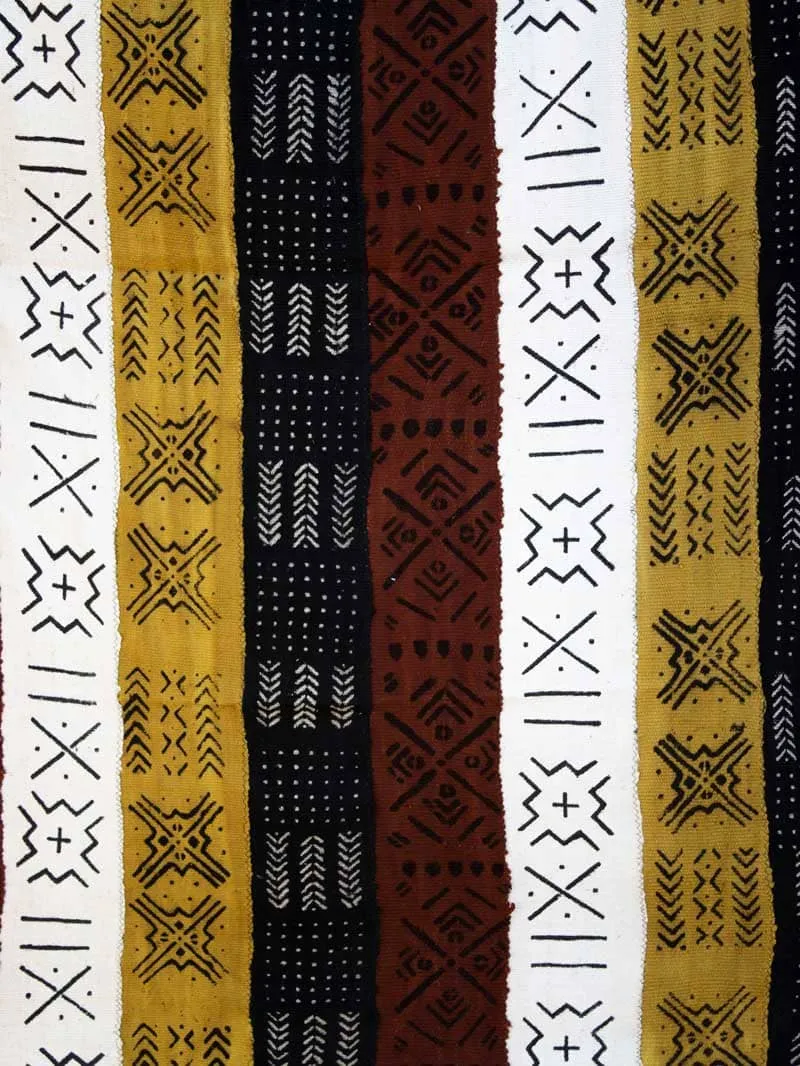
Bogolan, often referred to as bogolanfini in its full form, is a clay-dyed fabric native to Mali. Its name, derived from the Bambara language, says it all: bɔgɔ means “earth” or “mud,” lan means “by means of,” and fini means “fabric.” In other words, it is literally a fabric dyed with mud.
Specifically, bogolan is made from strips of hand-woven cotton, which are then assembled and decorated using a dyeing technique that involves fermented mud and plant-based dyes. Every authentic Malian bogolan is the result of meticulous craftsmanship, which is why each piece of bogolan is truly one-of-a-kind. This unique character—whereirregularity becomes a signature rather than a flaw—distinguishes bogolan from mass-produced industrial prints such as African wax fabric. To better understand the role of fabrics in the continent’s fashion scene, our guide to materials used in African fashion offers a comprehensive overview.
The History of Bogolan: An Ancient Art

The history of bogolan has its roots in the Mandinka and Bambara cultures, where this fabric has held a central symbolic place for centuries. Traditionally, bogolan was not merely a decorative garment: it served an important social and spiritual purpose.
Among the peoples of Mali, fabric was a part of life’s important moments. Hunters, respected figures in society, wore bogolan tunics believed to offer them protection against the dangers of the bush and invisible forces. The fabric also played a key role ininitiation rites for young girls and in ceremonies marking major life events—births, coming-of-age rites, and weddings. Each piece of fabric tells a unique story and conveys values specific to Malian culture.
Today, this heritage extends beyond Mali’s borders: related traditions can be found in Burkina Faso and in several regions of WestAfrica, reflecting the shared cultural richness of this region. To understand bogolan’s place in the broader narrative of the continent, dive into our feature onthe history of African fashion.
The Bogolan-Making Process, Step by Step
The craft of bogolan is a demanding art form that relies entirely on natural materials and meticulous workmanship. Here’s how artisans bring this fabric to life.
It all begins with weaving. Local cotton is spun and then woven into thin strips on traditional looms; these pieces of fabric are then sewn edge to edge to form a larger piece. This initial weaving stage determines the final quality and texture of the bogolan.
Next comes the preparation of the dye. The fabric is first soaked in a decoction of leaves—often those of the n’galama tree, which are rich in tannins—giving it a yellowish base. It is this impregnation that will later make possible the famous chemical reaction at the heart of the process.
The artisan then applies, with a brush or spatula, the mud collected from rivers and left to ferment for several months—sometimes more than a year. Upon contact with the tannins in the fabric, the iron in the mud triggers a chemical reaction that permanently sets the dark color. The fabric is then left to dry in the sun.
The final steps involve washing the fabric and, using soap or a solution that bleaches the yellow base, bringing out the unique patterns in light colors against a dark background—or vice versa. This manufacturing process can be repeated several times to intensify the contrasts. The result: deep, natural colors achieved without any synthetic dyes. These entirely eco-friendly dyeing techniques have made bogolan a symbol of sustainability—a value that is increasingly sought after in responsible fashion.
Bogolan Patterns and Their Meanings
One reason bogolan is so fascinating is that each pattern has a meaning. Far from being mere ornaments, bogolan patterns form a true visual alphabet. Each piece of bogolan can thus symbolize social status, protection, an event, or membership in a group.
Geometric patterns —lines, zigzags, crosses, checkerboards, and dots—are combined according to specific codes. A design may evoke an animal, an element of nature, or a proverb. This is how bogolan tells stories: for those who understand its language, reading a piece of fabric is like deciphering a message rich in meaning. This symbolic dimension ties in with that of colors, a topic we explore in our article on the symbolic colors of African clothing.
Bogolan Today: Between Tradition and Modernity
Long confined to ritual use, bogolan has made remarkable strides in establishing itself on the international stage. It now strikes a balance between authenticity and modernity, without ever losing sight of its origins.
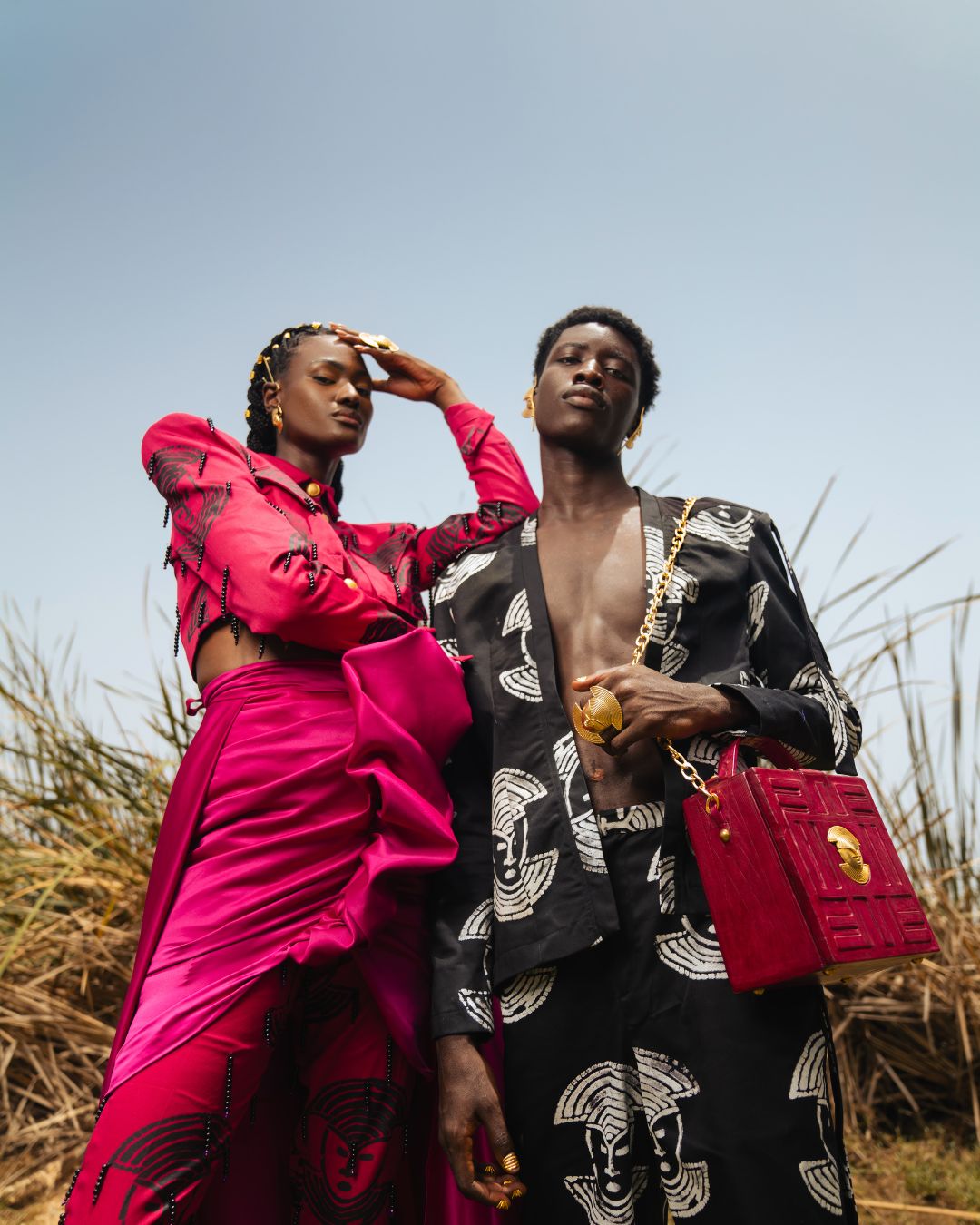
As early as the 1980s, pioneering designers such as Malian fashion designer Chris Seydou dared to introduce bogolan fabric into haute couture, proving that this ancestral fabric could harmonize with contemporary silhouettes. Since then, bogolan has been used to create everything from shirts to jackets, dresses, reimagined kimonos, and accessories. It’s common to see a bogolan jacket or kimono featured in haute couture collections, while a bogolan collection may combine custom-made pieces with ready-to-wear designs.
This balance between tradition and modernity appeals to customers seekingauthenticity and meaning. The fabric adds an instantly recognizable ethnic touch, without ever veering into folklore. Local artisans are increasingly collaborating with brands and designers, which helps showcase their craftsmanship while ensuring its continued transmission. Discover the talents who are reinventing this heritage in our section dedicated to African fashion designers and our overview of African haute couture.
Bogolan Beyond Fashion: Decor and Lifestyle

The appeal of bogolan extends beyond clothing. Today, this African fabric has earned a prominent place in interior design. Whether used for pillows, throws, wall hangings, rugs, or headboards, bogolan fabrics add a warm, ethnic touch and bring character to any space.
This versatility stems from the fabric’s raw beauty and its natural hues, which complement many interior styles. When used in home decor, bogolan also tells a story and brings artisanal textiles into the heart of the home. Just as in fashion, what makes it so appealing here is its uniqueness: since no two pieces are exactly alike, each item becomes a one-of-a-kind creation.
Why Choose Authentic Bogolan Fabric
At a time when the market is flooded with printed imitations, choosing authentic, handcrafted bogolan is particularly important. An authentic Malian bogolan, hand-dyed using traditional dyeing techniques, not only guarantees superior quality and durability but also directly supportsAfrican artisans andcraftsmanship.
Choosing authentic bogolan means choosing slowness, craftsmanship, and meaning over mass production. It means recognizing that a fabric can be beautiful, ethical, and imbued with history all at once. In the grand narrative of the continent’s textile heritage, bogolan holds a truly unique place, alongside other iconic fabrics such as wax print and bazin.
How to Care for Bogolan Fabric
Because it is dyed with mud using natural materials, bogolan requires slightly more delicate care than industrial fabrics. A few simple precautions are all it takes to preserve its natural colors over the long term.
It is recommended to hand-wash bogolan in cold water with a mild, bleach-free soap to avoid damaging the pigments produced by a natural chemical reaction. Avoid machine washing at high temperatures, as this could weaken the cotton fibers and cause the patterns to fade. After washing, it is best to dry the fabric flat in the shade rather than in direct sunlight for extended periods.
These simple steps extend the life of each piece of bogolan and honor theartisan’s meticulous craftsmanship. When properly cared for, an authentic piece of bogolan can, in turn, be passed down as a true family heirloom —remaining true to its original purpose as a living memory of African culture.
A fabric made in Africa
From the patient hands of Malianartisans to the fermented mud of the rivers, all the way to the runways of haute couture collections, bogolan fabric perfectly embodies the union of ancestral craftsmanship and modern creativity. A powerful symbol of Malian culture and the cultural richness of WestAfrica, it continues to tell, pattern by pattern, the story of a people and of a harmonious blend of tradition and modernity.
Want to continue your journey into the heart of African creativity? Explore all our latest news in the Fashion section of Africa Fashion Tour, your go-to source for African fashion.