The contemporary media landscape is going through a phase of structural change, in which centralized narratives are now being challenged by the decentralized scope of the creative economy.. This phenomenon reached a tipping point at the turn of 2026 with the launch of “Speed Does Africaa 28-day expedition across 20 African nations led by creator Darren Watkins Jr. aka IShowSpeed..
Much more than a series of entertainments, this tour functions as a massive ethnographic study fundamentally altering the West’s perception of the continent.. Bypassing traditional filters, this initiative offers an objective look at the modern infrastructures, vibrant urban cultures and complex socio-political realities of a diverse Africa..
Deconstructing stereotypes through raw authenticity
For decades, the international perception of Africa has been shaped by a “deficit narrative” centered on poverty and lack of development.. Speed’s “In Real Life” (IRL) broadcasts provided a direct counterpoint to these dated visions..
- Urban immersion in Angola: In Luanda, spectators discovered a sophisticated car culture marked by high-speed drifting and the presence of high-end vehicles, breaking the trope of “huts and safaris.”.
- Digital culture shock: In Angola, encounters with local fans who have perfectly mastered the culture of global memes proved that Internet culture now serves as a universal language, even in regions marginalized by traditional media..
- Neighborhood life in South Africa: In Johannesburg, immersion in the “Gusheshe” subculture of the townships illustrated a creativity and urban resilience rarely seen by international audiences..
East Africa: technology hub and digital rivalry
If Southern Africa laid the cultural foundations, East Africa triggered a statistical explosion, revealing a technologically savvy youth proud of its identity..
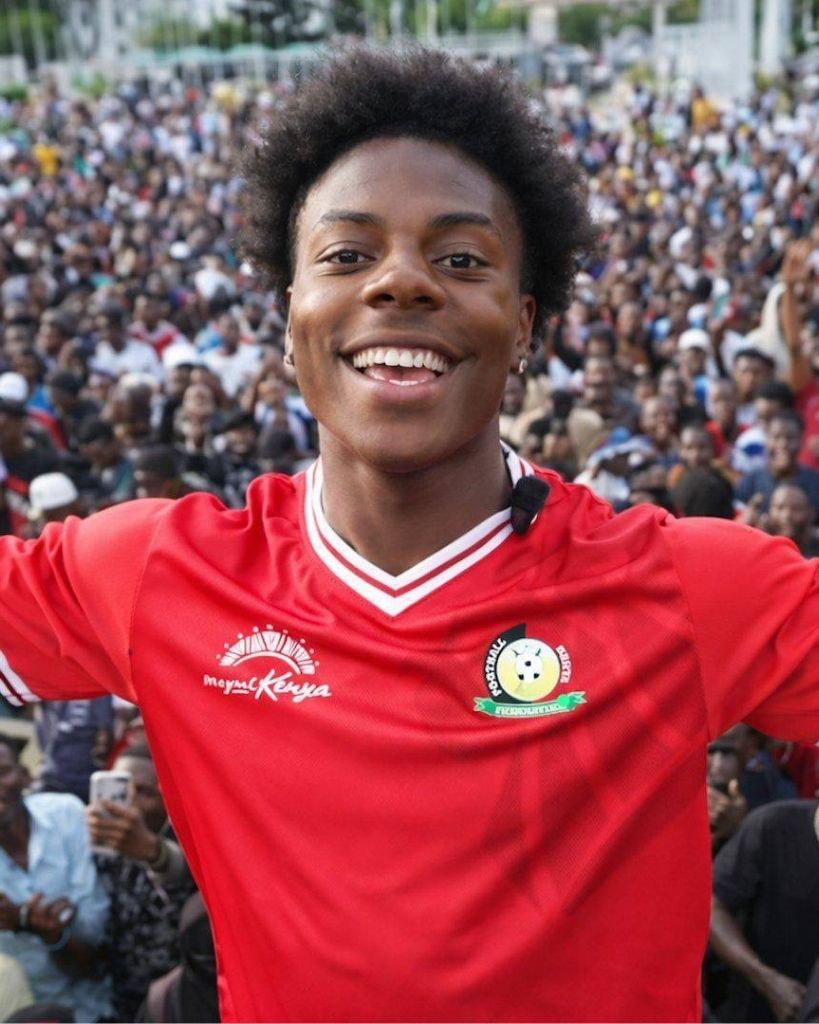
- Kenya, the cradle of creativity: Nairobi has positioned itself as a leading center for digital innovation.. Such was the reception that the government, through Tourism Minister Rebecca Miano and President William Ruto, actively exploited the visit to present the country as a “melting pot of cultures” and a creative hub..
- The Ethiopian record: In Addis Ababa, the mobilization was total to surpass the Kenyan records.. The broadcast peaked at 257,000 simultaneous viewers, showing that Africa is capable of mobilizing massive global audiences in real time..
Challenges and milestones
The tour was also marked by moments of technological and regulatory breakthrough. On January 15, 2026, IShowSpeed became the first creator to broadcast live from inside the Great Pyramid of Giza in Egypt, a milestone that required close coordination with local authorities to ensure stable connectivity.
However, friction arose in Cairo, where strict regulations on filming and public interaction highlighted the tension between the “spontaneous” nature of modern streaming and the regulatory environments of some states.
A lasting impact on tourism and identity
The impact of this tour goes beyond the digital. It marks the shift from “charity” tourism to “commerce” and experience tourism..
- Emotional resonance for the diaspora: For many African-Americans, seeing a young black man welcomed as a “brother” in modern metropolises sparked renewed pride and a desire to visit the continent..
- Economic implications: By showcasing world-class infrastructure and high-speed Internet, the tour validated the goals of national tourism strategies, such as Kenya’s, targeting five million arrivals by 2030.
IShowSpeed forced a global audience to catch up with a reality that Africa already knows about itself: it’s modern, vibrant and incredibly diverse.. The tour demonstrated that the authenticity of laughter shared in a marketplace or the adrenalin of an urban drift do more for a nation’s image than years of institutional PR..
Read also
- Luxury tourism in Africa: a little-known reality
- Afrominimalism according to Tosin Oshinowo
- The first Arab Fashion Prize