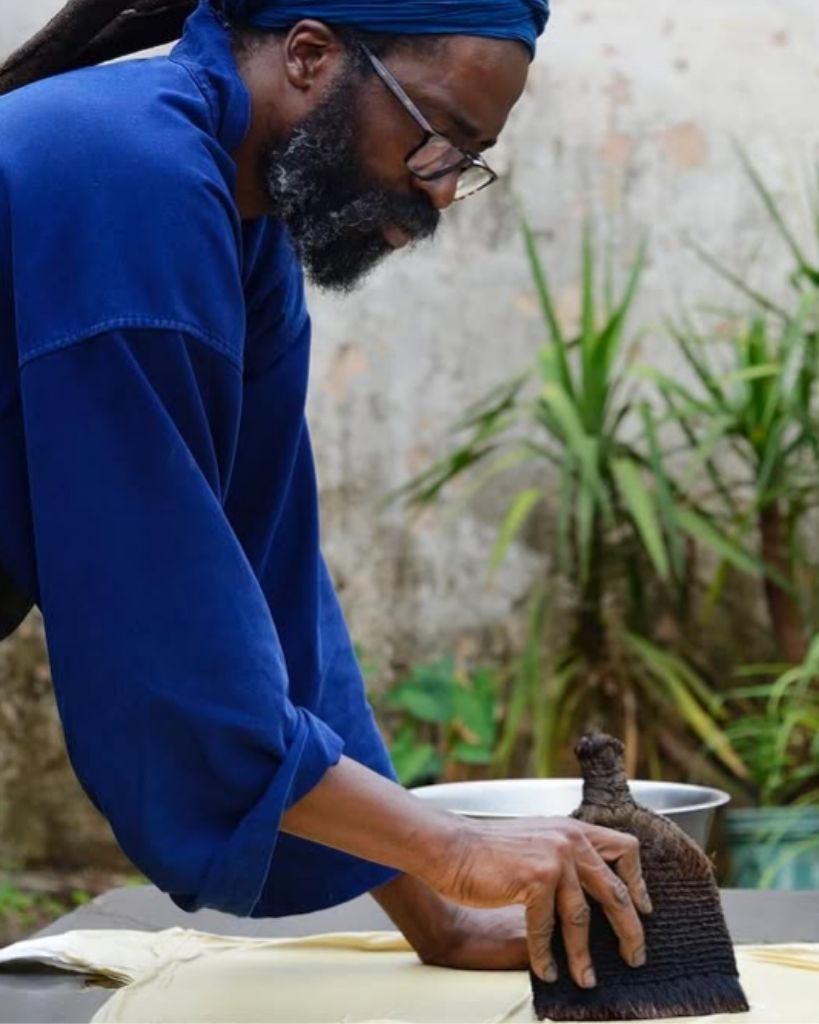
Western art historians and critics have long viewed African textiles in isolation and anonymously, denying the identity and technical contributions of the artisans who created them. This lack of academic consideration is all the more detrimental given that textiles are inherently ephemeral and fragile in the face of harsh climatic conditions, unlike metal or stone sculptures. The history of African art has been built on a major analytical imbalance, prioritizing the study of sculptural and pictorial forms at the expense of textile productions
The Historical Invisibility of African Textiles
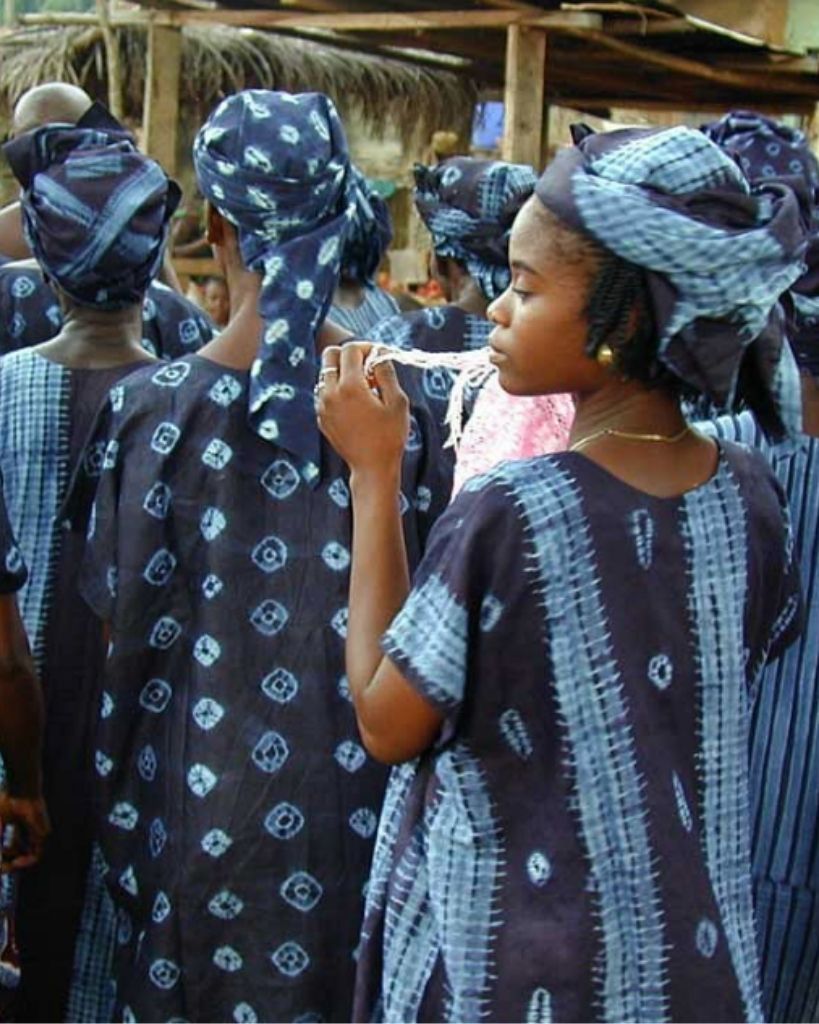
The historiographical treatment of African textile arts reflects a persistent methodological bias in global aesthetic canons. By confining weaving, dyeing, and embroidery to the subordinate categories of “decorative arts” or “material culture,” Eurocentric frameworks of thought have obscured the philosophical, social, and scientific dimensions of these artistic productions.
Unlike bronze or stone sculptures, textiles share an inherent vulnerability to microorganisms, humidity, and temperature fluctuations. This material fragility has historically limited their preservation in physical archives, making it easier for their technical memory to be lost.
This marginalization has also contributed to the systematic anonymization of local creators in Western imperial collections. Whereas Western art history meticulously documents the authorship of works, African textiles have often been exhibited as generic products of an “ethnic group” or an immutable “tradition,” devoid of any creative individuality.
The contemporary decolonial shift seeks to deconstruct this reductive interpretation by demonstrating that textiles are not merely a medium for ornamentation, but a complex system of writing, codification, and molecular engineering.
Anatomy of Disruptive Institutions

To reverse these symbolic and material power dynamics, three major institutions are now implementing complementary strategies to assert their sovereignty across the continent and among its diasporas.
The African Textile Institute (IAT) and the Museum of African Textiles (MAT)
The African Textile Institute (IAT) is a pioneering organization founded and led by Mariama Camara, a textile designer, researcher, and activist of Guinean origin based in New York. With more than two decades of expertise in haute couture and having been introduced to the art of textiles from a very young age, Mariama Camara has structured the IAT around a single mission: to rigorously document the 54 textile traditions of the African continent in order to establish a new standard of respect and compensation for local artisans.
The institute’s museum and exhibition branch is the Museum of African Textiles ( MAT). Designed as a space for promotion and active conservation, the museum relies on the institute’s official publication, IAT Magazine, to disseminate critical research and analyses of fashion shows.
The primary mission of the IAT and MAT partnership is to eliminate the anonymity of local producers through systemic projects such as “Know Their Names” and “We cannot separate the work from the makers .” The goal is to compel the global fashion industry to shift from a model of cultural appropriation or uncredited inspiration to one of ethical evaluation and authentic co-creation.
The Nike Davies-Okundaye Museum of African Textiles
Located within the renowned Nike Art Gallery in Lekki, Lagos State (Nigeria), the African Textile Museum is the first institution of its kind in sub-Saharan Africa. Its founder, Nike Davies-Okundaye, is an internationally renowned textile designer, recognized worldwide for her mastery of and efforts to revitalize the traditional Yoruba adire fabric.
The mission of this museum is to collect, preserve, and exhibit traditional and contemporary textiles from Nigeria and other regions of Africa to serve as a resource for students, scholars, and researchers around the world. Unlike traditional art museums, which treat clothing as an inanimate object from the past, Nike Davies-Okundaye’s institution links historical preservation with contemporary economic viability, continually training new generations of dyers and weavers.
The African Fashion Research Institute (AFRI)
Founded in June 2019 by the South African researcher and curator Dr. Erica de Greef and interdisciplinary artist Lesiba Mabitsela, the African Fashion Research Institute (AFRI) is an intellectual collective dedicated to decolonial thought as applied to clothing and textiles from the Global South.
AFRI’s mission addresses the systemic absence of Afro-centered fashion and textile histories in educational curricula, exhibitions, and colonial institutional archives. The institute aims to dismantle stereotypes and redefine exhibition and teaching methodologies by partnering with practitioners, filmmakers, writers, and scholars. AFRI combines critical research and digital archives to document local clothing practices as acts of political resistance and expressions of identity.
Knowledge Mapping and Systematic Reviews
Each of these institutions pursues specific areas of research and houses unique physical or digital collections.
1. The Pano di Pinti of Guinea-Bissau
The African Textile Institute launched its national documentation program , “Africa 54 Nations,” with an in-depth study of the pano di pinti (also known as pano de pente or “pagne de peigne”), a true cornerstone of Guinea-Bissau’s material culture. This cotton textile, characterized by a complex weaving technique involving narrow strips that are subsequently joined together, serves as a form of social currency and a major cosmological symbol among the Papel and Manjaco peoples.
The technical analysis conducted by the IAT highlights the mathematical precision and complex semantic coding of these fabrics, in which each pattern conveys a specific meaning:
- Panos Baguéra (Bee Motifs): A symbol of community organization and collective work.
- Udju di baka (Cow’s-Eye Motifs): Protection, vigilance, and pastoral prosperity.
- Polôn (Structures Inspired by the Fromager Fungus): Spiritual roots, genealogy, and the memory of ancestors.
- Panu-letra (Symbolic or Alphabetical Forms): Coded communication; transmission of political and family messages.
This study came up against a bitter archival reality: when the National Museum of Guinea-Bissau finally reopened in 2017 after years of civil war, virtually all of the precious photographic archives documenting this tradition had been destroyed, leaving only 400 contact sheets that had been saved by director Albano Mendes, anthropologist Ramon Sarró, and curator Ana Temudo.
This historic loss of tangible cultural heritage underscores the critical need for the IAT’s efforts, as it collaborates with local cooperatives such as Artissal to preserve these techniques, while working to secure their international legal protection through the African Intellectual Property Organization (OAPI).
African Color Alchemy™
The African Color Alchemy™ research program led by Mariama Camara at the IAT lays the groundwork for both cultural and ecological sovereignty, marking a complete break from the use of imported toxic synthetic chemicals.
Drawing on communities’ environmental knowledge, the IAT is studying the extraction of dyes from natural elements such as roots, seeds, bark, leaves, and soil. In 2019, workshops held in Guinea and Côte d’Ivoire in partnership with the Kindia Women Dyers’ Association led to the development and stabilization of a palette of more than 100 natural and biodegradable colors.
This initiative directly addresses the environmental disaster caused by synthetic dyes and the collapse of local artisanal markets in the face of low-quality industrial imitations, by offering a sustainable alternative that places African plant science at the center of the global debate on eco-design.
AFRI’s “The Fold” Project
In 2023, the African Fashion Research Institute developed a conceptual program titled *The Fold*. This project explores techniques of folding, draping, and manipulating fabrics as geographical, temporal, and cognitive maps of African clothing.
It is structured around three complementary components:
- The Fold Glossary: an innovative glossary of local terms related to clothing, collected primarily from tailors and immigrants from Central and West African countries at Greenmarket Square in Cape Town, thereby challenging the dominance of Western fashion vocabulary.
- The Fold Podcast (Tolika Mtoliki): a platform dedicated to collecting material and oral histories of textiles.
- The Fold Pan-African Research Residency: a research residency fostering transcontinental connections centered on ancestral textile knowledge.
The Textile Ecosystem as an Infrastructure for Sovereignty
The convergence of the initiatives undertaken by these institutions has a profound impact on narrative reappropriation, intellectual recognition, and the reorganization of global fashion value chains.
From Inspiration to Design Infrastructure
Historically, African textiles have been reduced by Western brands to “mere colorful patterns” or to a decontextualized “folkloric spectacle.” The work of these institutional networks challenges this perspective by asserting that African textiles are not merely superficial embellishments but rather the technical and conceptual foundation of design.
Designers who have been trained or brought to the forefront by these trends exemplify this intellectual and economic transformation:
- Kenneth Ize: whose entire collections revolve aroundAso Oke, the handwoven fabric of Nigeria’s Yoruba community, produced directly in collaboration with local weavers in Ilorin. His work brings the time-honored craft of handmaking back to the heart of the Paris Fashion Week schedule.
- Florentina Agu (Hertunba): a sustainable ready-to-wear brand launched in $2020$ that blends traditional Akwete andAso Oke weaving techniques with contemporary, structured silhouettes. Hertunba trains and fairly compensates a community of women artisans, using fashion as a tool for social healing.
- Aristide Loua (Kente Gentlemen): Based in Abidjan since $2017$, this designer uses handwoven fabrics from Yamoussoukro and Korhogo, blending a modern, poetic aesthetic with a rigorous, ethical made-to-order production process.
- Armando Cabral: a Guinean-Bissau designer who incorporates the “pano di pinti” of the Papel and Manjaco peoples directly into the design of luxury shoes manufactured in Europe. His collaboration with USM Modular Furniture, named “Nkyinkyim” after the Adinkra symbol of resilience, demonstrates that these cultural symbols embody a spatial philosophy applicable beyond the realm of fashion.
Legal Protection and the Fight Against “Artisanal” Neocolonialism
Cultural sovereignty cannot exist without economic sovereignty. The flood of imported industrial copies and speculation on generative artificial intelligence models fed by imagery of African creations without financial compensation constitute new forms of exploitation.
By working together to raise awareness about intellectual property (particularly with OAPI) and by rigorously cataloging each piece, the IAT and the MAT are establishing a legal framework to protect the collective copyrights of communities. The institutions emphasize that African textile craftsmanship is a form of precision engineering that must be protected against synthetic counterfeits that destroy jobs and ecosystems.
Outlook
An analysis of this ecosystem of institutions highlights a decisive turning point for cultural sovereignty in Africa. The physical preservation carried out by institutions such as Nike Davies-Okundaye’s African Textile Museum is essential for safeguarding highly perishable works. However, this preservation effort cannot stand alone if it is not supported by the scientific documentation programs of the African Textile Institute (IAT) and the theoretical and decolonial analytical tools developed by the African Fashion Research Institute (AFRI).
The unification of these forces makes it possible to irreversibly transform the status of African artisans, moving them from that of “anonymous producers” to that of legitimate creators, masters of complex weaving techniques and natural chemistry. By combining rigorous archiving, ecological innovation, and legal protection of intellectual property, these organizations are shaping a future in which African textiles are no longer treated as second-rate resources, but rather as jewels of global material intelligence.
Photos: 1 Aboubakar Fofana, 2 @instituteofafricantextile, 3 @pettretaylor
Read also