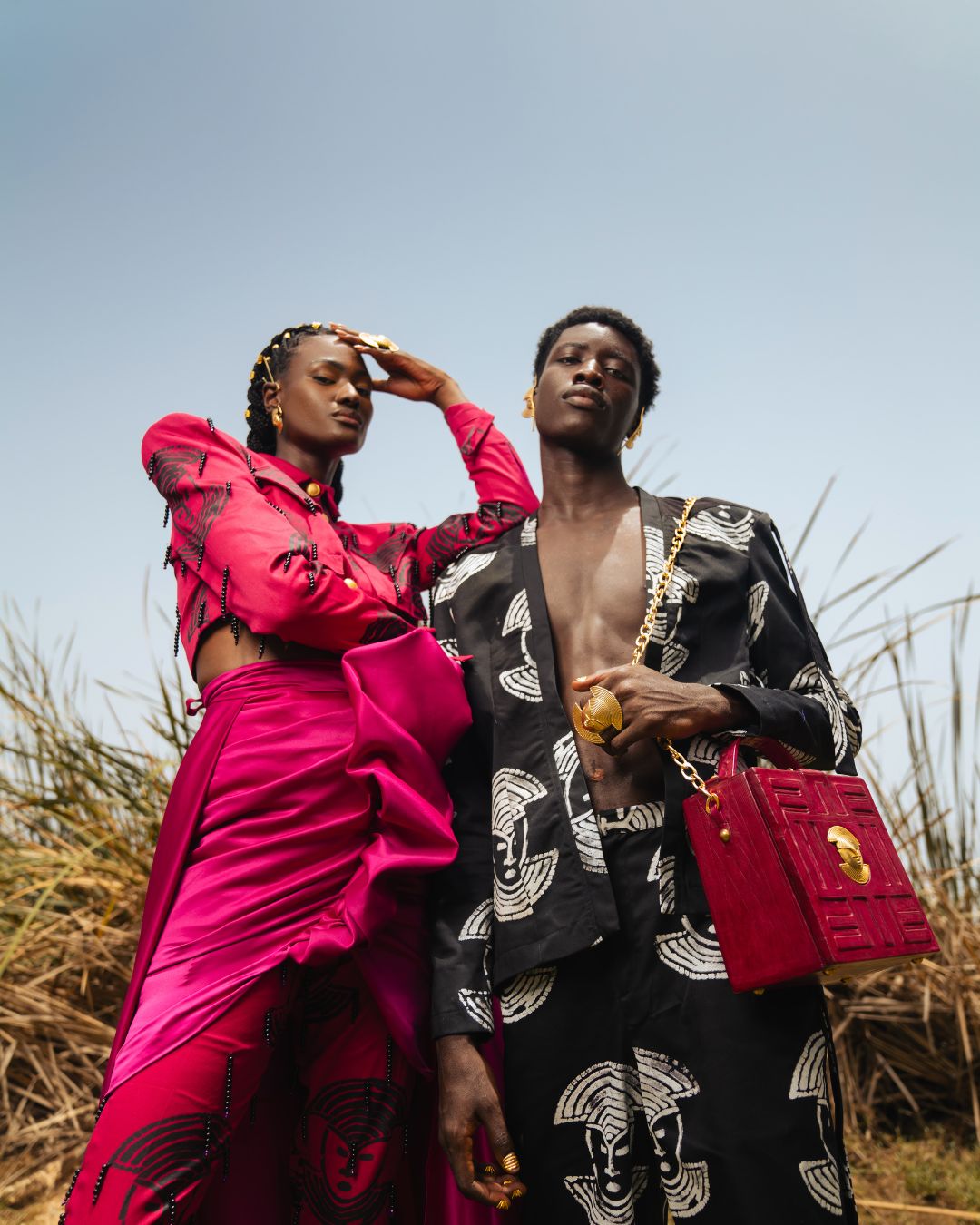
Elie Kuame and the Elephants’ royal dressing room
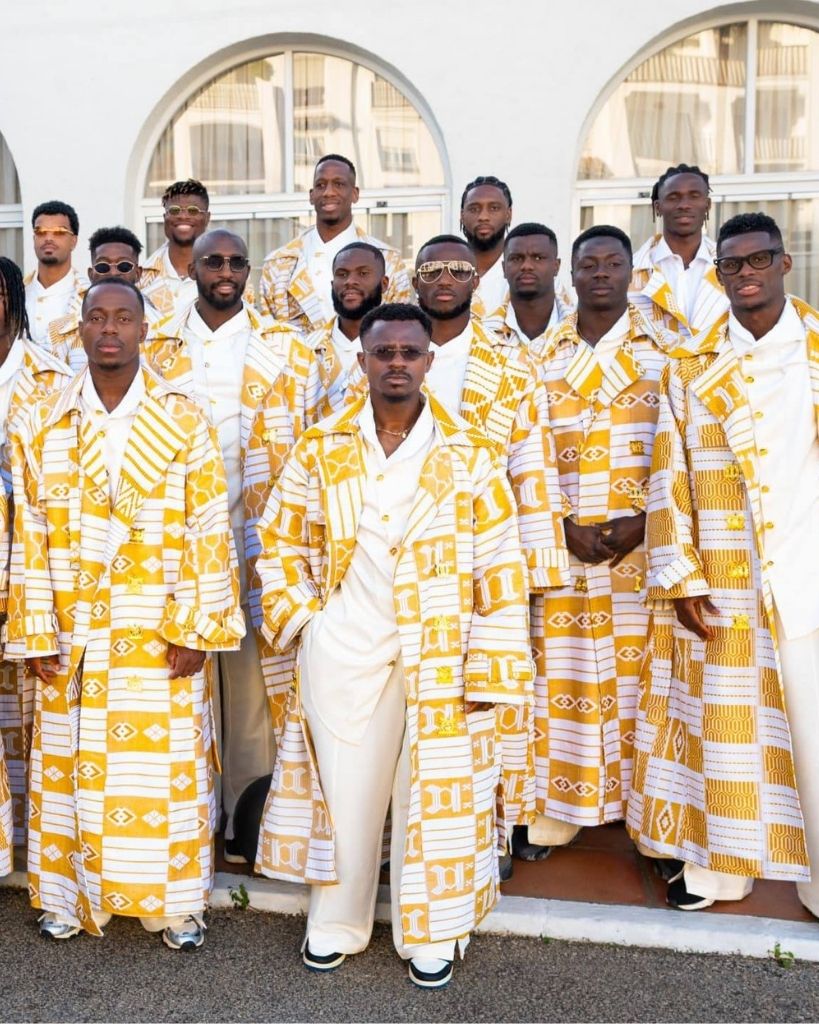
The most striking image of this competition will undoubtedly remain the arrival of the Ivorian national team. Under the creative direction ofElie Kuame, the Elephants arrived not as mere athletes, but “like kings”.
The designer, whose cultural mix (Ivorian, Lebanese, Mauritanian) permeates every piece, has transformed textiles into prestigious armor. By integrating symbols of royal authority, such as Akan stools, and working with noble materials such as Kita loincloth and Baoulé, Kuame has achieved a technical fusion of tradition and modernity.
“The objective was to project an image of power.” – Elie Kuame.
The technical challenge was immense: to structure a traditionally “soft” hand-woven loincloth into impeccable trench coats capable of rivaling the world’s greatest luxury houses. The omnipresent gold is not just a color, but a symbol of Côte d’Ivoire’s social influence.
La Guerre des Étoffes”, a pan-African textile diplomacy
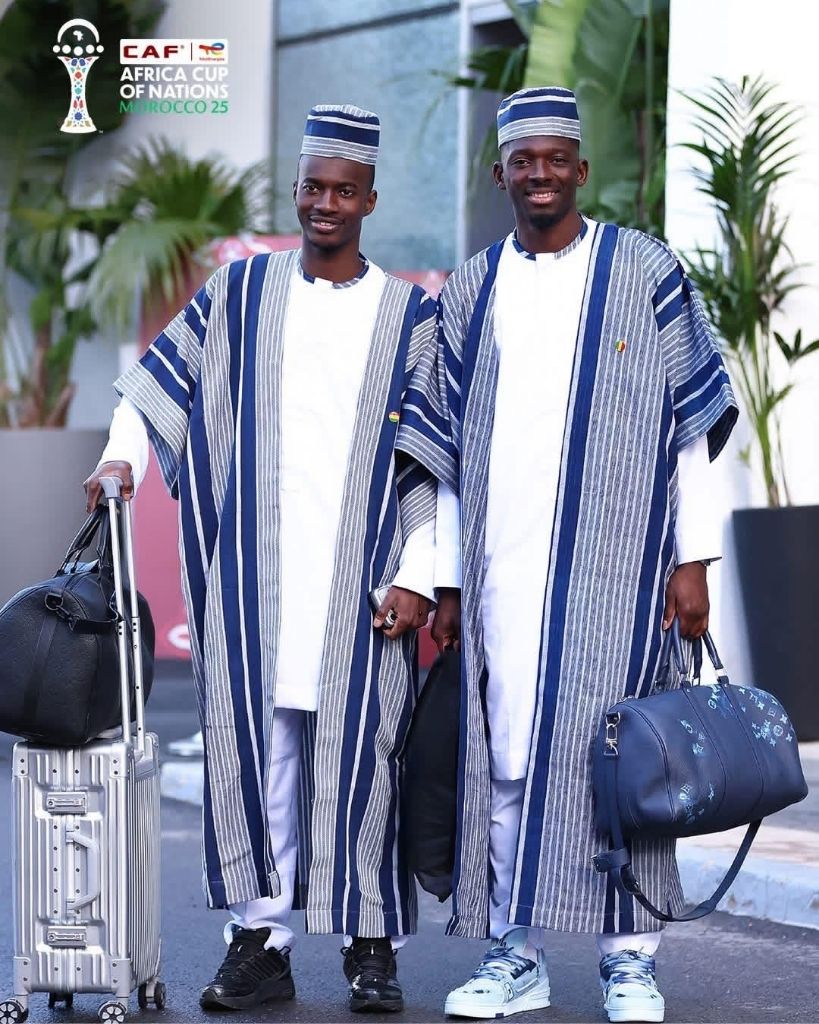
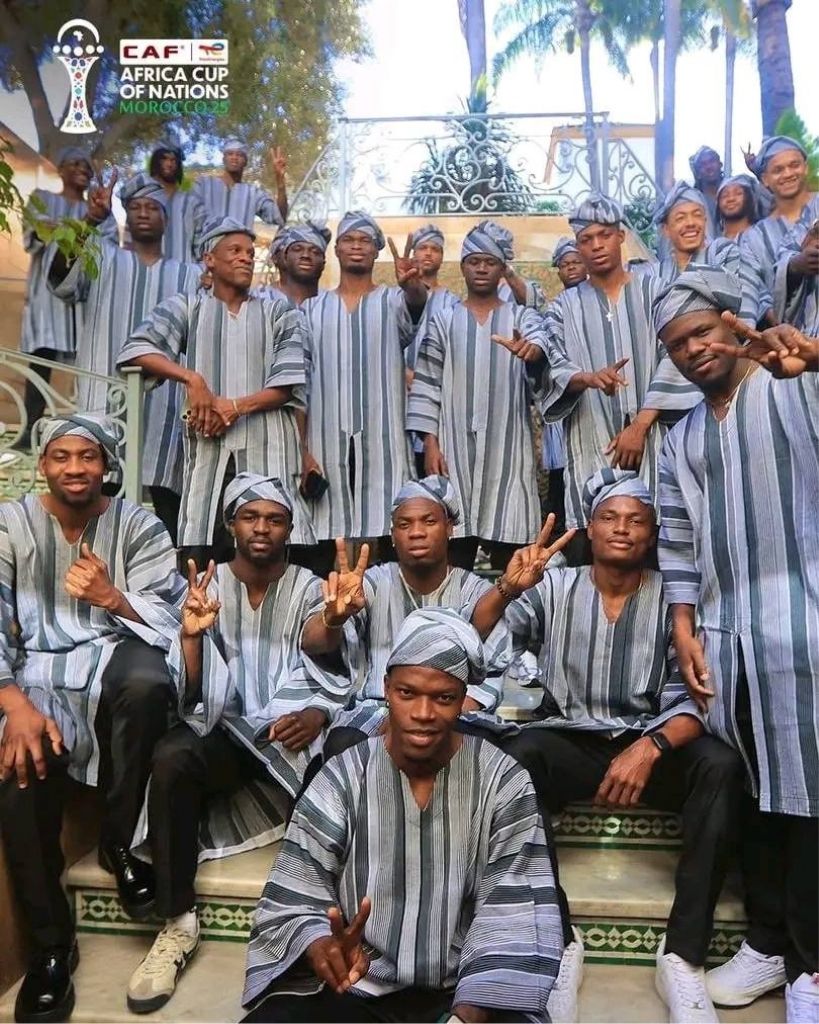
The phenomenon is not limited to Côte d’Ivoire. Each delegation has turned its arrival into a declaration of identity:
- Mali and Bogolan: In choosing this mud-dyed fabric, the “Eagles” carried a message of wisdom and resistance.
- Burkina Faso and Faso Danfani: Symbols of national integrity and local cotton production.
- Senegal and the Grand Boubou: a demonstration of refined elegance and discipline.
- Benin and the Baru Bekuru: Highlighting the ancestral know-how of the Baatonu people.
This geopolitics of clothing shows that African nations have regained control of their narrative. Wearing these endogenous creations is an explicit act of resistance against validation by Western luxury conglomerates like LVMH or Kering.
Economic leverage for local crafts
Behind every garment lies an entire ecosystem. The institutionalization of national textiles at the CAN generates stable demand for thousands of weavers, dyers and embroiderers. As UNESCO points out, Africa has the potential to become a world leader in fashion.
Textile craftsmanship is no longer just a tradition, it’s an economy of the future. The sale of these products supports education and health in rural areas. This is what experts call “hammer and tool diplomacy”: a way of reminding us that the craftsman has a central place in a world that is going digital.
Sovereign, eco-responsible fashion
In 2025, African designers such as Hawi Midekssa (Ethiopia) and Frank Aghuno (Nigeria) are proving that Afro-futurism is on the march. Unlike Fast Fashion, African artisanal fashion favors quality, time and respect for the craftsman.
The CAN 2025 proved one thing: a nation’s success is now measured as much by the strength of its goals as by the nobility of its thread. By replacing multinational logos with ancestral motifs, Africa is no longer content to play the game of others; it is creating its own rules.
Read also