There are faces that, on their own, tell a story of bridges between two continents. Flora Coquerel ’s is one of them. Crowned at just nineteen years old, this Franco-Beninese woman with a radiant smile didn’t just win the most-watched pageant on French television—she embodied, for the duration of her reign, a diverse France proud of its African roots. More than a decade later,the former Miss France remains a leading figure in the French fashion scene, an ambassador for mixed-heritage beauty, and a dedicated entrepreneur whose heart still beats for Benin. Here’s a look back at the journey of a beauty queen who became an icon.
A childhood shaped by two cultures
Flora Coquerel was born on April 14, 1994, in Mont-Saint-Aignan, in the Seine-Maritime department. Born on April 14, 1994, she grew up in Eure-et-Loir, not far from Chartres, as one of three siblings. But to understand the woman she has become, we must trace her family history, which is deeply rooted in West Africa.
Her father, a young advocate for progress, left for Benin in his early twenties to help develop agricultural and livestock farming techniques. It was there, on Beninese soil, that he met the woman who would become Flora’s mother. Upon returning to France, the couple continued to forge ties between the two countries through charitable work. From childhood onward, little Flora was immersed in a world where humanitarian commitment and a dual cultural background were simply a given. She is both French and Beninese, and has always viewed these two identities as nothing but a source of richness.
Before stepping into the spotlight, the young woman had set her sights on a career in business. She began a BTS program in international trade, a course of study that already demonstrated her global outlook and ambition. Modeling and beauty pageants were not among her childhood dreams at the time: it was almost by chance, encouraged by those around her, that she one day walked through the doors of a Miss pageant.
From the Miss Orléanais Pageant to the National Crown

The first major turning point came in the fall of 2013. On October 6, 2013, Flora Coquerel won the Miss Orléanais pageant, becoming the first young woman from her region to claim this regional title. This victory opened the door to her national journey.
A few weeks later, in December 2013, the 2014 Miss France pageant was held at the Zénith in Dijon, in the Burgundy region. In front of millions of television viewers, the contestant from the Orléans area pulled off a surprise victory. Amid her competitors, she was crowned Miss France 2014. The title of Miss France was presented to her by her predecessor, Marine Lorphelin,the former Miss Burgundy who had held the title for a year, under the guidance of Sylvie Tellier, then director of the Miss France organization.
Becoming Miss France—for someone who had never even considered it—turns everything upside down. The Miss France crown propels this international business student into the spotlight as a public figure in a single evening. But the event doesn’t go without controversy. In the wake of her crowning as Miss France, some members of the public focused on her mixed-race heritage. Far from letting this unsettle her, the young woman fully embraced her background and asserted her right to represent a cosmopolitan, diverse France—one that reflects the country as it truly is. She has turned the mixed heritage that some criticize into a badge of honor. In doing so, Miss France has broken new ground: she embodies a beauty that isn’t limited to a single color, a beauty queen who proudly embraces her blend of European and African ancestry.
This crowning continues a tradition of Miss France winners from all walks of life. Before her, figures like Malika Ménard had left a lasting impression; after her, other young women such as Iris Mittenaere, Alicia Aylies, and Amandine Petit would in turn wear the crown and keep this nearly century-old beauty pageant alive.
Miss World, Miss Universe: International Influence
The Miss France pageant is often just the first step. As the winner, now crowned Miss France, Flora Coquerel represents France on the international stage. She competed in the Miss World pageant in 2014 and, the following year, in the Miss Universe pageant.
In fact, it was at the Miss Universe pageant that the young woman achieved one of France’s finest performances in recent decades. In 2015, she made it into the Top 5 of the prestigious global beauty pageant —a feat no French contestant had accomplished in over sixty years. This achievement, celebrated far beyondFrance’s borders, confirms theformer Miss France’s global influence and her poise on the most demanding runways. The comparison speaks for itself: while Iris Mittenaere and Flora Coquerel have each shone on the international stage—the former even winning the top title of Miss Universe in 2016—these young women have helped put France back at the center of the world’s major beauty pageants.
Kelina: When the Crown Serves Benin
If there’s one thing to take away from the post-pandemic era, it would undoubtedly be this: Flora Coquerel never viewed her Miss France title as an end in itself, but rather as a powerful platform. True to her family’s legacy, she decided to continue the work her parents had started in Benin.
They had founded the Inter-Action Bénin association, dedicated to local development. Alongside them, Flora Coquerel created her own organization:the Kelina Association. A true family project, Kelina focuses primarily on health and education, guided by one conviction: to address the real needs expressed by local residents rather than impose solutions from outside. The former queen is using her year on the throne to provide a unique platform for this humanitarian cause.
Over the years, the projects have grown in scope. The most powerful symbol of this commitment is undoubtedly the Nana Zalia Maternity Hospital, conceived and funded bythe Kelina Association in a region where access to care for mothers and newborns remained precarious. After several years of planning, this maternity ward finally opened its doors, offering women in the area a dignified and safe place to give birth—a tangible step forward, a far cry from the glitz and glamour of the runway. To fund these initiatives,former Miss France Flora Coquerel has organized charity galas bringing together numerous personalities from the media world, and her work has been recognized on several occasions, notably as the “favorite” charity of a major French luxury group.
What is striking is the consistency of this commitment. A beauty pageant lasts only one evening, and a reign lasts only one year; yet the work in Benin has been sustained over the long term, well after the crown had passed to a new winner. The organization has celebrated several anniversaries and has been recognized on numerous occasions, both in France and in Benin, by the nonprofit sector and the general public alike. While media attention naturally wanes once the Miss France title has been passed on to the next winner, Flora Coquerel has chosen to remain faithful to a cause that transcends her personal life, driven by the family ties that still bind her to this land where some of her loved ones live.
This spirit of solidarity partly explains why Flora Coquerel’s name resonates so strongly with the African public and the diaspora. While many see a beauty pageant as nothing more than a glamorous diversion, she has managed to turn her fame into a catalyst for development on her mother’s continent.
Flora Coquerel and the fashion world: a presence that never wanes

While her commitment to her role has taken center stage in her life, the fashion-savvy Miss France has never turned her back on the world of fashion and beauty—quite the opposite. After her reign, the woman who once dreamed of becoming a fashion designer signed with a modeling agency and has collaborated with numerous prestigious fashion houses.
Her most iconic fashion event is undoubtedly the Etam fashion show. Every year,the Etam Live Show kicks off Paris Fashion Week in an atmosphere that blends lingerie, music, and stage performances. Flora Coquerel has become a regular on the runways there, often surrounded by other former beauty queens. Several generations of Miss France have walked the runway together: Iris Mittenaere, Alicia Aylies, Amandine Petit, and Flora, all gathered under the spotlight to celebrate femininity. This reunion is a testament to the enduring sisterhood among the Miss France winners, long after the crowns have passed to new hands.
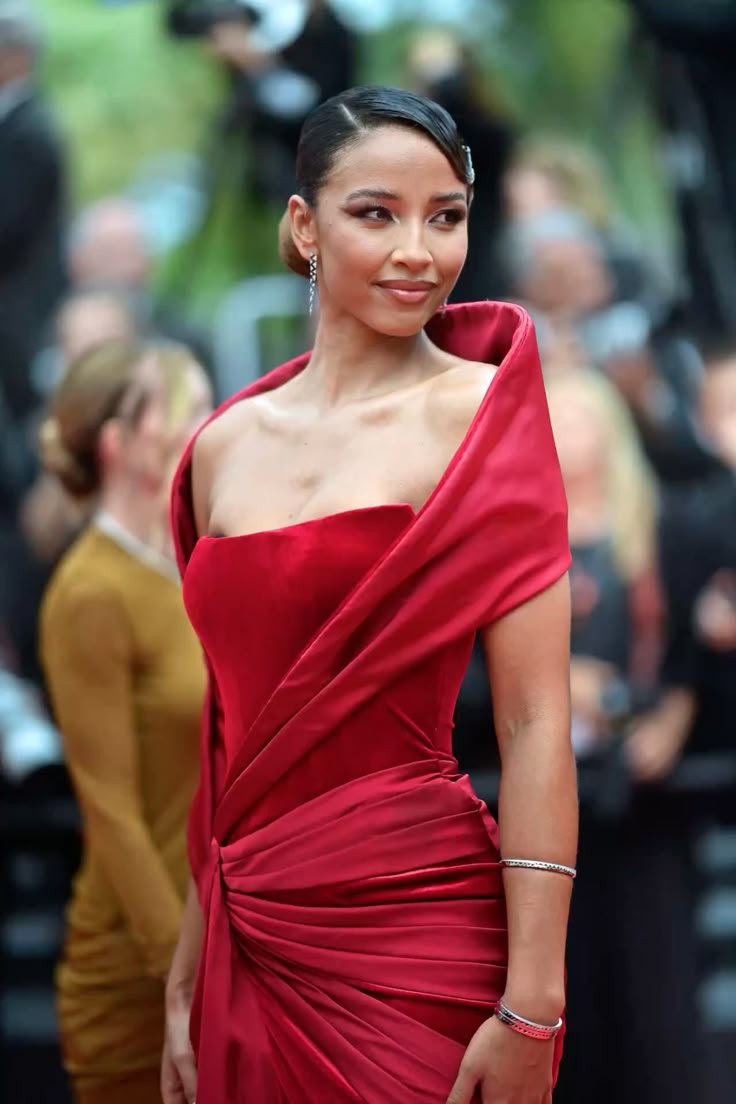
Former Miss France Flora Coquerel also shines in a more understated setting: the world of haute couture. She was notably spotted at the Stéphane Rolland fashion show, where the sculptural architecture of the designer’s creations perfectly complemented her slender figure. Her presence at major events doesn’t stop there: every spring, the beauty queen is among those spotted at the Cannes Film Festival, ascending the famous steps of the Palais des Festivals in eye-catching outfits, ranging from daring slit dresses to understated elegance.
A businesswoman at heart—her associate’s degree in international business was no accident—she has also taken on numerous personal projects, even going so far as to develop her own approach to cosmetics. This entrepreneurial spirit—rare among beauty pageant winners—adds another string to her bow and extends, in the economic sphere, the independence she has championed since her early days.
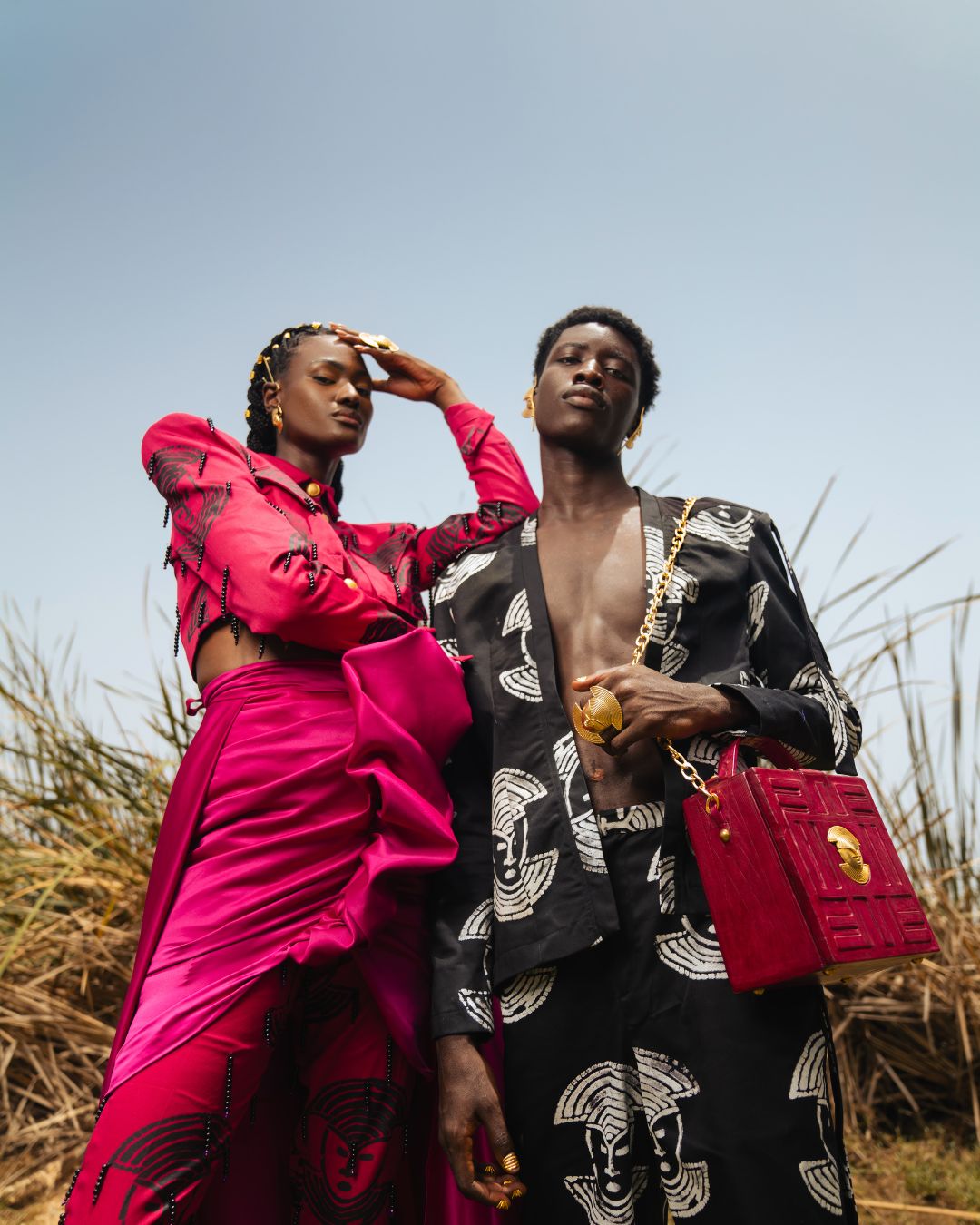
Beyond the runway,the former Miss has established herself as a sought-after ambassador in the beauty industry. Major cosmetics and skincare brands have enlisted her as a brand ambassador, drawn to her modern personality—one that resonates with her generation and embodies a mixed-heritage beauty that remains all too rare in advertising. As a content creator, she has also lent her voice and face to documentaries celebrating Afro fashion: through wax—the colorful fabric that has become a symbol of cultural fusion —she shines a spotlight on designers of African descent and their growing influence on contemporary fashion.
A beauty icon who resonates with an entire generation
What sets Flora Coquerel apart from many other Miss France pageant winners is her ability to bridge two worlds. She is both the heir to a quintessentially French tradition—that ofthe beauty pageant and its ceremonies, watched by millions—and the face of a modernity that looks toward Africa.
For a media outlet like this one, dedicated to African fashion and beauty, her journey is particularly inspiring. Here is a woman who has never had to choose between her two identities— French and Beninese—and who has turned her mixed heritage into a creative strength and a lifelong commitment. Her journey reminds us that Black and mixed-race beauty has a rightful place on the biggest runways—from the red carpet at Cannes to the Etam fashion show—and that fame can go hand in hand with purpose, when a crown gives way to motherhood in the heart of Benin.
From a young international business student to the dedicated entrepreneur she is today—with her crowning as Miss France in December 2013 along the way—Flora Coquerel has charted a unique path. In the eyes of many, she remains much more than just a successful former Miss France: she is an ambassador for dialogue between France and Africa, a beauty queen who has given meaning to her title, and a source of inspiration for all those who identify with the richness of cultural diversity.
As new generations of Miss France continue to take the stage, the mark left by the 2014 Miss France winner remains indelible. Not only because she was crowned Miss France 2014 one December evening in Dijon, but because she has proven, year after year, that a crown can go hand in hand with convictions—and that the most beautiful kind of beauty is perhaps the one that shines far beyond the catwalk.
Want to learn more about African beauty? Our special feature answers these questions in detail.