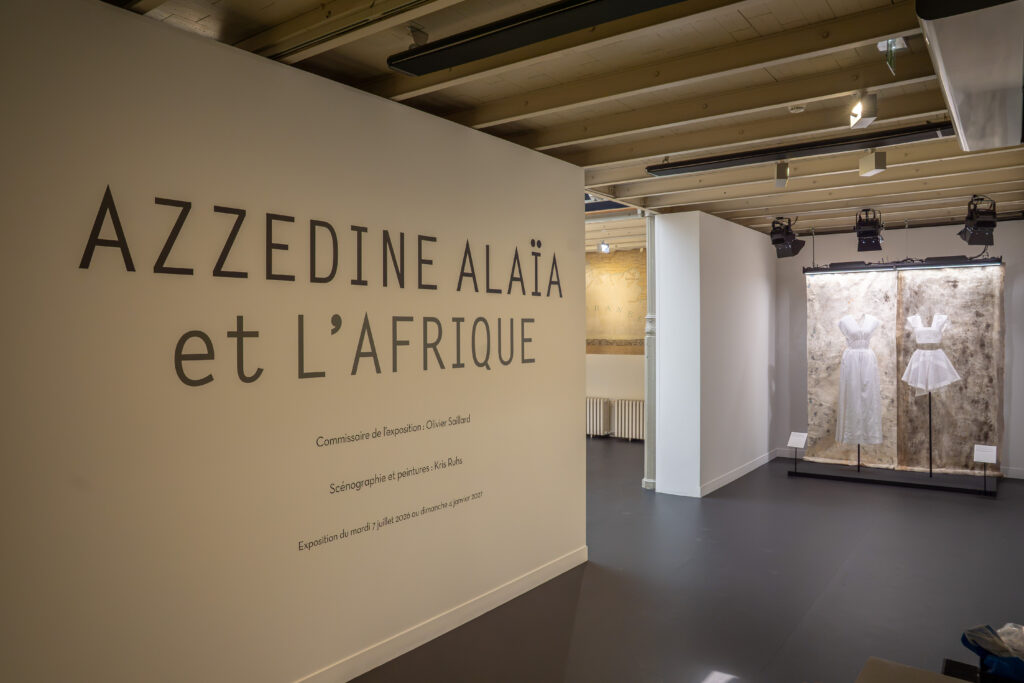
Amid Paris’s vibrant cultural scene, it is important to avoid any thematic confusion. While the Mobilier National recently focused (between December 2025 and January 2026) on highlighting the rich historical ties between India and France in the field of textiles, the exhibition at the Azzedine Alaïa Foundation (open from July 7, 2026, to January 4, 2027) is devoted exclusively to the fashion designer’s native continent.
Widely described by critics as an “intimate tribute,” this thematic exhibition, curated with great care by Olivier Saillard, brings together more than 60 exceptional figures. From the outset, the exhibition avoids the pitfalls of “folkloric exploitation” or seasonal exoticism. For Alaïa, Africa was not a catalog of colorful motifs to be drawn upon once the season arrived, but a mental framework, an architectural rigor, and a sacred relationship with the female body.
Having earned recognition and legitimacy within the French world of haute couture, Azzedine Alaïa was committed throughout his career to incorporating the inspirations of a country and a continent that he had left at an early age but which continued to hold a deep fascination for him.
Memories from Tunis to the plains of Kenya
Azzedine Alaïa’s working method is based on a fascinating paradox. Unlike his contemporaries, who traveled the globe in search of distant inspirations, the designer was not a frequent traveler. He liked to say that he “traveled from his chair, ” sitting motionless behind his cutting table, his eyes fixed on his scissors and his fabric. His work thus draws on a rich tapestry of childhood memories, documentary research, and rare, significant physical encounters. The exhibition’s layout is organized around three geographic and commemorative areas:
Tunisian Childhood and White Abstraction
Born in Tunis in 1935, Alaïa grew up immersed in Tunisia’s minimalist aesthetic. The exhibition opens with pieces in white cotton of striking visual brilliance, a direct echo of the whitewashed walls of Sidi Bou Saïd. The fashion designer plays with the hide-and-seek of bodies and fleeting silhouettes, designing his clothes to evoke the rare breeze of warm climes. From those same whitewashed facades—which are splashed with cold water in the summer to cool the courtyards—the fashion designer sought to create a scent and a sensation.
The traditional mashrabiya, designed to provide ventilation and preserve privacy, evokes his childhood memories. Alaïa reinterprets it using laser-cut and perforated supple leather, transforming the garment into an openwork second skin. He also draws inspiration from North African men’s simple jackets, from which long striped shirts emerge—proudly showcased in his 1992 collection.
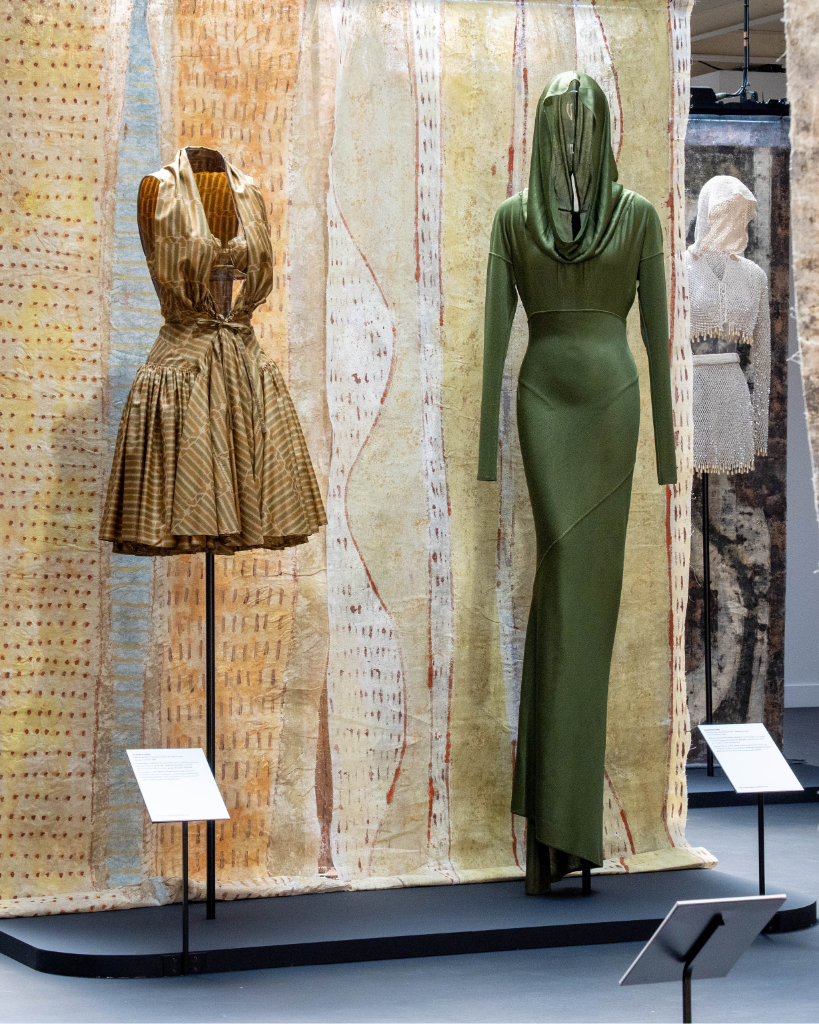
In transition, designs from 1983 and 1984 introduce a matte, absolute black. This color choice draws its strength from the minimalist aesthetic of African masks made of charred wood or leather, stripping the silhouette of all superfluous artifice. The heads are draped in majestic hoods, and the movements take on the fluidity of a billowing fabric.
Ancient Egypt and Striped Dresses
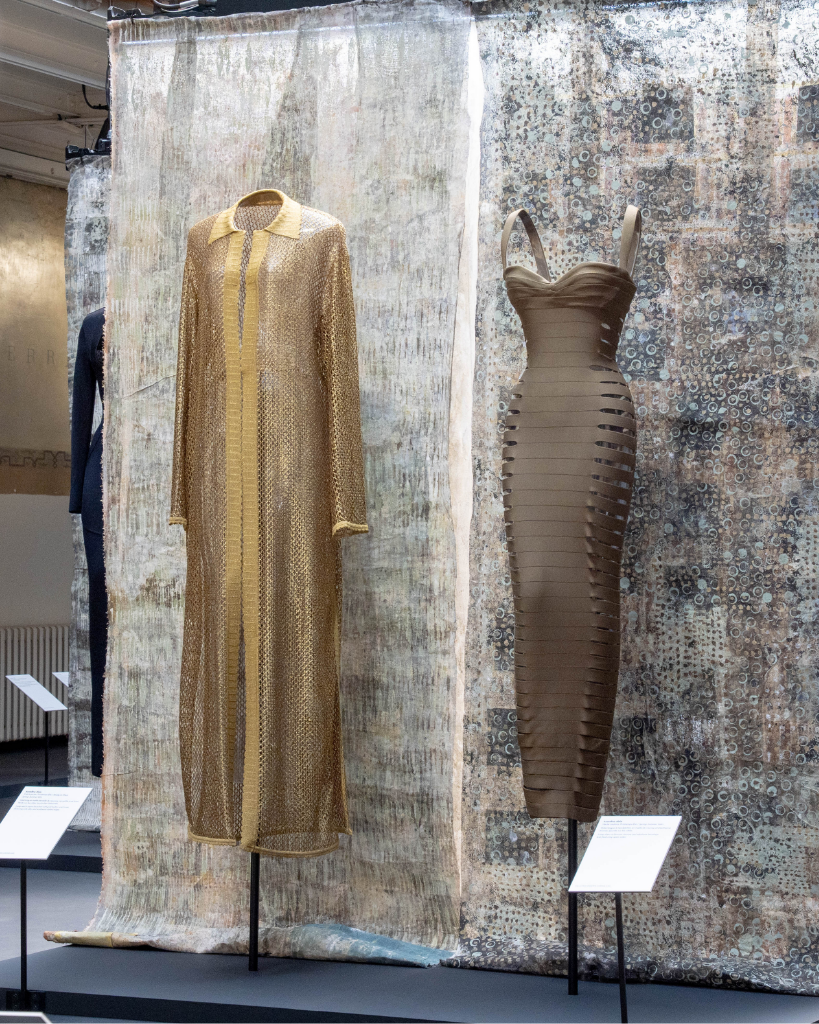
Fascinated by Egypt and the secret art of mummification, the designer meticulously studied the pharaonic techniques of mummy wrapping. This geometric and anatomical research culminated in 1985 with the invention of the famous “bandage dresses.”
These pieces, which rank among the greatest technical innovations in the history of contemporary fashion, use a structured stretch knit to shape, support, and flatter the female form without ever resorting to the rigid underwires or boning found in classic Western corsetry.
The Sub-Saharan Crisis and the Friendship with Peter Beard
The final third of the collection opens with the ruggedness and nobility of materials from sub-Saharan Africa. All the sandy hues of the sub-Saharan regions are evoked with nuance, much like the subtleties of the earth tones that seem to fade into intense reds. This creative turning point is closely linked to the close friendship between the fashion designer and photographer Peter Beard.
In 1996, they embarked together on a formative journey to Kenya, to Maasai country. Beard’s photographs, on display on the first floor of the foundation, document this aesthetic revelation and attest to the designer’s enthusiasm. Awed by the women’s poise, stature, and “noble bearing,” Alaïa translated this majesty into his runway shows, introducing raw and organic materials such as raffia and twine, and adorning his designs with embroidery made of seashells and cowrie shells in three landmark collections: Spring/Summer 1988, 1989, and 1990.
Rethinking Creation Stories
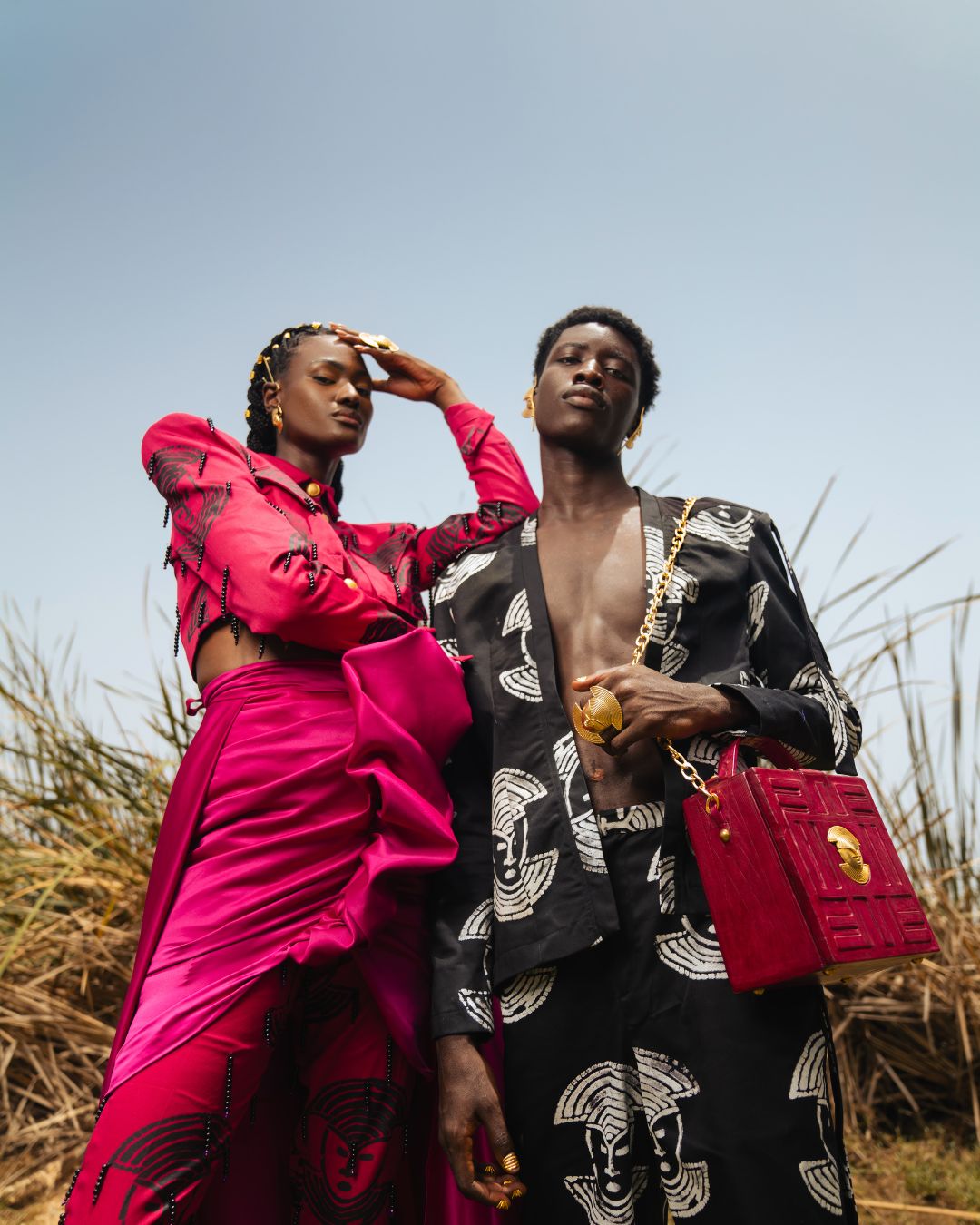
The presentation of Alaïa’s “Africa” collection in Paris coincides with a period of unprecedented scholarly excitement. Over the past five years (2021–2026), numerous researchers, curators, and fashion historians have emerged to broaden the frameworks for interpreting the history of costume and to document the continent’s aesthetic autonomy.
Scientific analysis shows that legendary designers such as Pathé’O laid the foundations for an autonomous, modern, and triumphant textile industry as early as the era of independence.
Here is a selective overview of the major contributions from this period of editorial transition:
- Postcolonial Fashion Critique: Decolonizing Historical Narratives, Archives, and Media (2021/2022) – Vienna Academy of Fine Arts Press: This anthology lays new theoretical foundations for analyzing fashion by challenging the traditional distinction between “Western fashion” and “ethnic clothing.”
- Africa Fashion (2022 / 2026 – Christine Checinska, V&A Publishing): The catalog accompanying the leading global traveling exhibition, which traces the impact of African independence on the continent’s assertion of identity and textile heritage.
- “A Brief History of Postcolonial African Fashion: From Bògòlanfini to Contemporary Womenswear” (2023 – Journal of Fashion Studies): A rigorous study documenting the transition from traditional bògòlanfini (popularized by Seydou Doumbia) to urban and contemporary fashion.
- “From Pathé’O to Abidjan’s Young Guard: The Resurgence of West African Textiles” (2024 – Vogue Business): An overview of efforts to preserve local artisanal craftsmanship in the face of global markets, celebrating the identity and legacy of Pathé’O (the famous woven-cotton shirts worn by Nelson Mandela).
- “The Rise of Trans-African Haute Couture” (2026 – Journal du Luxe): An in-depth analysis of designers and artists (Ernest Dükü, Assoukrou Ake, Marie-Claire Messouma Manlanbien) who use raffia, linen, and cowrie shells to enrich the concept of international haute couture.
The Azzedine Alaïa Foundation: A Pillar of Cultural Transmission
The intersection between the exhibition “Azzedine Alaïa and Africa” and recent scholarly research highlights a fundamental shift in perspective. African fashion is firmly establishing itself as an autonomous creative hub, with its own technical structures and lineage of designers.
Recognized as a public benefit organization by decree dated February 28, 2020, the Azzedine Alaïa Foundation—founded by the fashion designer during his lifetime alongside Christoph von Weyhe and Carla Sozzani—brilliantly fulfills its mission of conservation, education, and support for contemporary creativity, notably through the awarding of grants to visionary young talents.
By placing Tunisia, Egypt, and sub-Saharan cultures on an equal footing artistically and technically, the exhibition scientifically validates a visual reality: Africa is at the heart of the most rigorous and enduring dialogues in haute couture.
Practical information :
- Dates: Tuesday, July 7, 2026, through Sunday, January 4, 2027.
- Location: Azzedine Alaïa Foundation, 18 Rue de la Verrerie, 75004 Paris.
- Hours: Open daily from 11 a.m. to 7 p.m.
- Subway: City Hall.
- Prices: Full price: €10 – Reduced price: €3
Read also