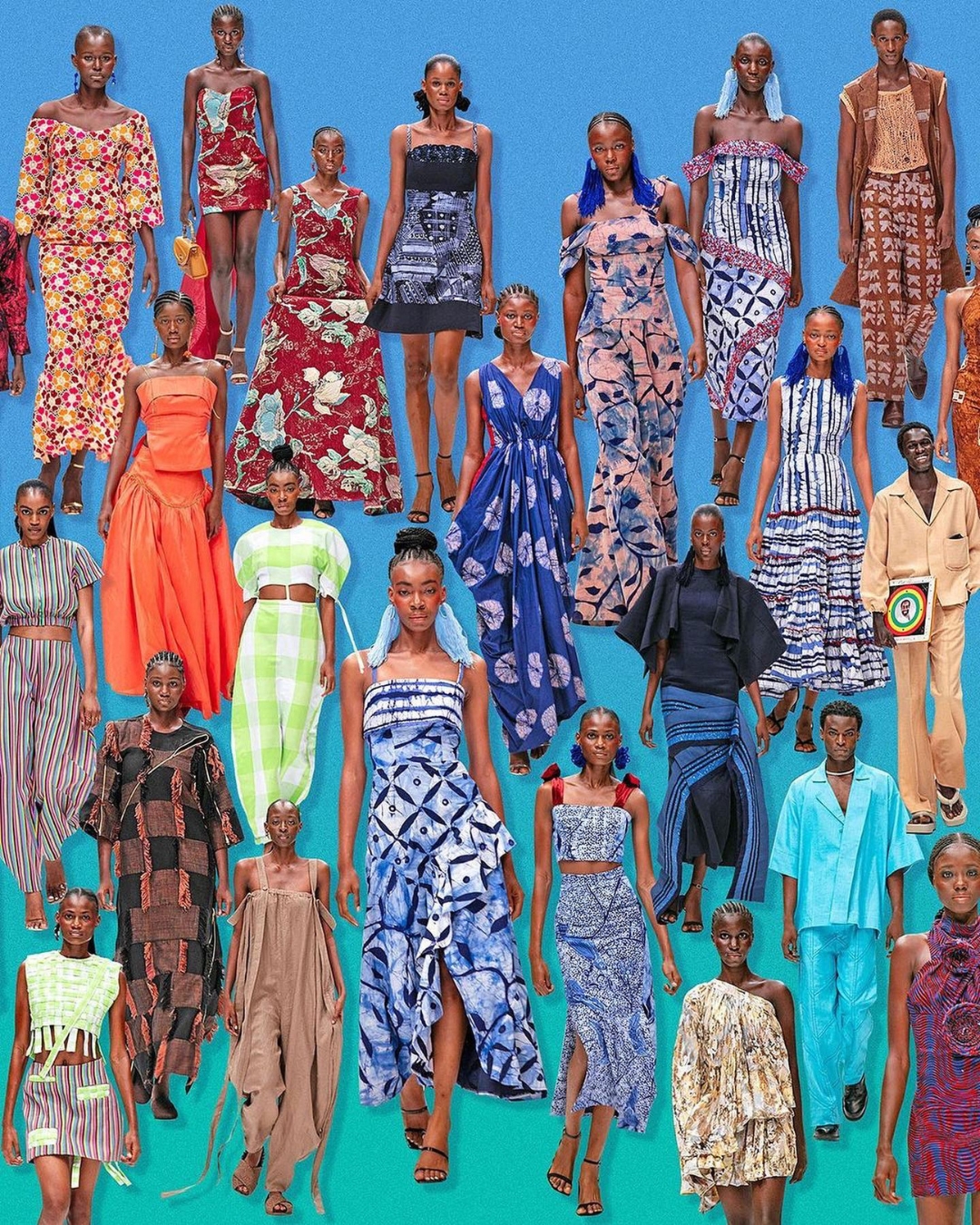
A legacy of commitment
Marie-Cécile Zinsou’s career is inextricably linked to a dual culture, initially lived in absence. Born in Paris to an illustrious Beninese family in exile, she grew up forbidden to set foot on the land of her ancestors. This geographical distance was bridged by total artistic immersion. Spurred on by her mother, a literature teacher, every visit to the Louvre or the Musée de l’Homme became a lesson in mediation.
It was at the age of 19 that destiny changed. What was intended to be a voyage of discovery to Benin became a permanent fixture. In 2005, she founded the Fondation Zinsou, with a clear mission: to give the Beninese access to their own contemporary art. “There was no place to see this locally,” she recalls. Twenty years on, her work has transformed Cotonou and Ouidah into major cultural epicentres.
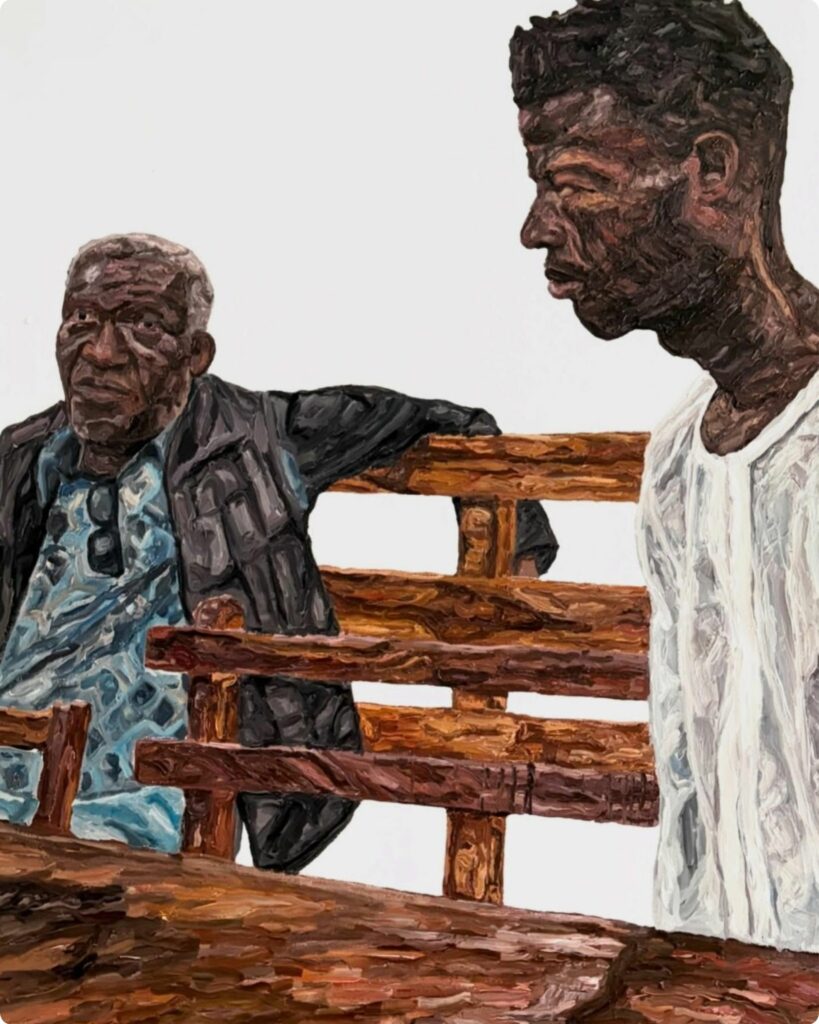
Nobel Koty
Benin Nation Branding
One of the most spectacular moments in Benin’s recent cultural history is the return, in 2021, of the 26 royal treasures looted by French colonial troops in 1892. For Marie-Cécile, this event marked the triumph of Nation Branding, a strategy driven by the President.
The Beninese government didn’t just welcome objects. It staged a nation. “The whole country was decked out in the colors of the works,” she points out. Flags on lampposts, logistics trucks flocked with effigies of royal thrones and statues, “Instagrammable” and ultra-professional visual communication.
This strategy is not just a question of marketing. It’s a diplomatic weapon. By presenting an image of excellence and pride, Benin has rendered obsolete the usual miserabilistic discourse of the Western media. When magazines like Harper’s Bazaar now call Marie-Cécile to find out about Cotonou’s “hot spots”, it’s proof that attitudes have changed, because the Beninese have first of all changed the way they look at themselves.
Decolonizing art history
Marie-Cécile Zinsou is adamant about terminology. For her, the vocabulary used by Western institutions is still too often imbued with a colonial vision.
-
The illusion of “primitive art”: She denounces the persistent use of terms like “primitive arts” or “tribal arts” to describe African art. “You can’t educate children in a world where their culture is considered primitive”, she insists.
-
Geographical nuance: She prefers to speak of“Contemporary Art in Africa” rather than“Contemporary African Art”. This nuance is crucial: she refuses to let the creativity of 54 countries be confined to a single uniform trend, whereas the West benefits from an infinite segmentation of its artistic movements.
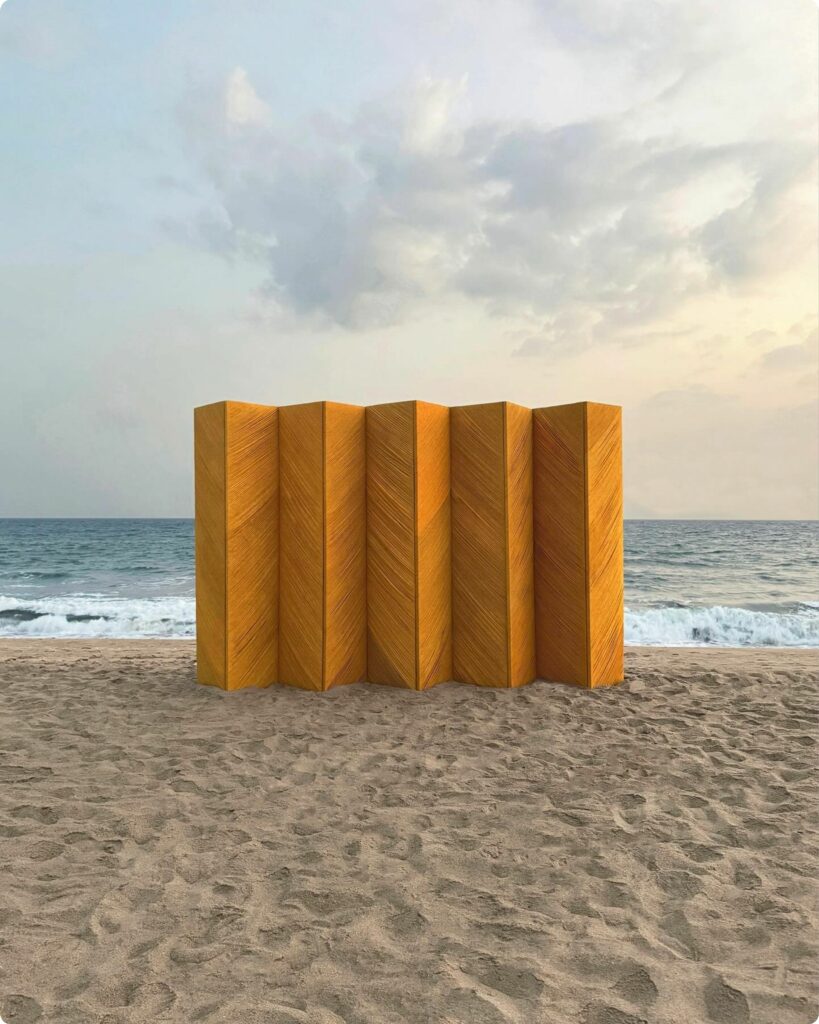
Alexandre Gourçon – Les Rayons
The milestone of historical maturity
The year 2026 marks a symbolic turning point for Benin. On September 11, 2026, the country will have been independent for exactly 66 years, the same length of time as the colonial period.
For Marie-Cécile, this temporal equality is an opportunity to “move on”. But this is not possible without a thorough understanding of the archives. The Foundation is preparing a major exhibition on this theme, exploring daily life under colonization in order to free ourselves from it. The aim is to stop defining ourselves in relation to the former colonial power, and to define ourselves in relation to it.
An ecosystem for artists
Beyond the exhibition, Marie-Cécile insists on the creation of a perennial ecosystem. 20 years ago, being an artist in Africa was a constant struggle, given the lack of production structures. Today, the Fondation Zinsou produces works, offers residencies and encourages international circulation.
While the Internet and Instagram have provided an unprecedented showcase for creators, they are no substitute for strong institutions. “We have to be the publishers of our own thinking,” she concludes. By multiplying the number of works on loan around the world (from Stockholm to Johannesburg), the Foundation is ensuring that the dialogue between cultures is no longer a one-way street.
Read also