The Need for Sovereignty and the Revitalization of African Fashion
The global fashion industry is undergoing a profound structural crisis characterized by overproduction and overconsumption. Consumers today purchase approximately 60% more clothes than in the early 2000s, while keeping those items for half as long. At the same time, fewer 1% of used textiles are recycled into new clothing.
In response to this linear model, which is devastating to the environment, the Lagos Fashion Week (LFW) has established itself as a world-class laboratory for sustainable innovation. Founded in 2011 by Omoyemi Akerele through her agency Style House Files, the platform brings together more than sixty designers and tens of thousands of visitors each season.
Omoyemi Akerele’s approach closely links artistic creation with environmental responsibility and socioeconomic development. This analytical framework stems from her time at the University of Warwick, where she earned a Master’s degree in International Economic Law (LLM) between 2001 and 2002. Her early research on the ecological and human impact of oil companies in the Niger Delta shaped her systemic understanding of the imbalances between natural resource extraction and the distribution of value added.
By applying this legal and economic expertise to the textile sector, she conceived Lagos Fashion Week as a tool for advocating environmental justice and industrial sovereignty. For Omoyemi Akerele, fashion must cease to be a tool of exploitation and become a vehicle for the regeneration and protection of communities.
This vision received historic recognition when the 2025 Earthshot Prize to Lagos Fashion Week in the category “Build a Waste-Free World” (Build a Waste-Free World), presented in November 2025 in Rio de Janeiro by Prince William, awarding the organization a grant of one million pounds sterling.
Trade Imbalances in Numbers
The manifesto launched at The Mills Fabrica in London is based on the observation of a profound trade injustice. To illustrate this phenomenon of value extraction, macroeconomic data from the continent reveal a glaring imbalance between exports of raw materials and imports of finished manufactured goods.
This net loss of value added for the continent can be expressed by the following equation:
Gross Textile Trade Balance = Exports of Raw Materials – Imports ofFinishedProducts. Thus, based on the estimated annual macroeconomic data:$15 billion – $23 billion = –$8 billion
This capital flight and this industrial processing deficit result in the following flows:
- Exports of raw materials (raw fibers, unprocessed cotton): estimated at $15 billion per year, characterized by very little local value added.
- Imports of clothing and footwear (finished ready-to-wear products): estimated at $23 billion per year, maintaining a heavy dependence on foreign markets.
- Net loss of value added: estimated at $8 billion per year, hindering the growth of local industrial employment.
The manifesto emphasizes that this imbalance is not the result of a lack of talent or resources, but of a “ownership gap” structurally perpetuated. The industrialized countries of the North have historically used Africa as a source of cheap raw materials and aesthetic inspiration, while retaining control over industrial design, patents, and the distribution of luxury goods. The manifesto calls for retaining the entirety of intellectual, material, artisanal, and logistical value on African soil.
The Blueprint: The 10 Pillars of Regeneration
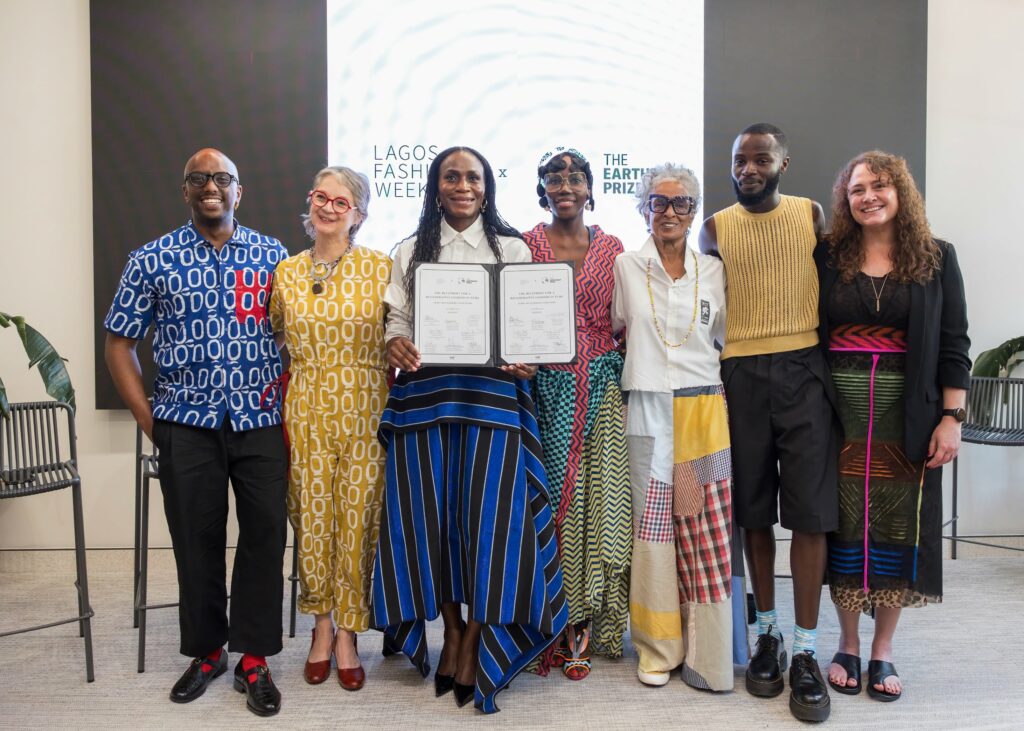
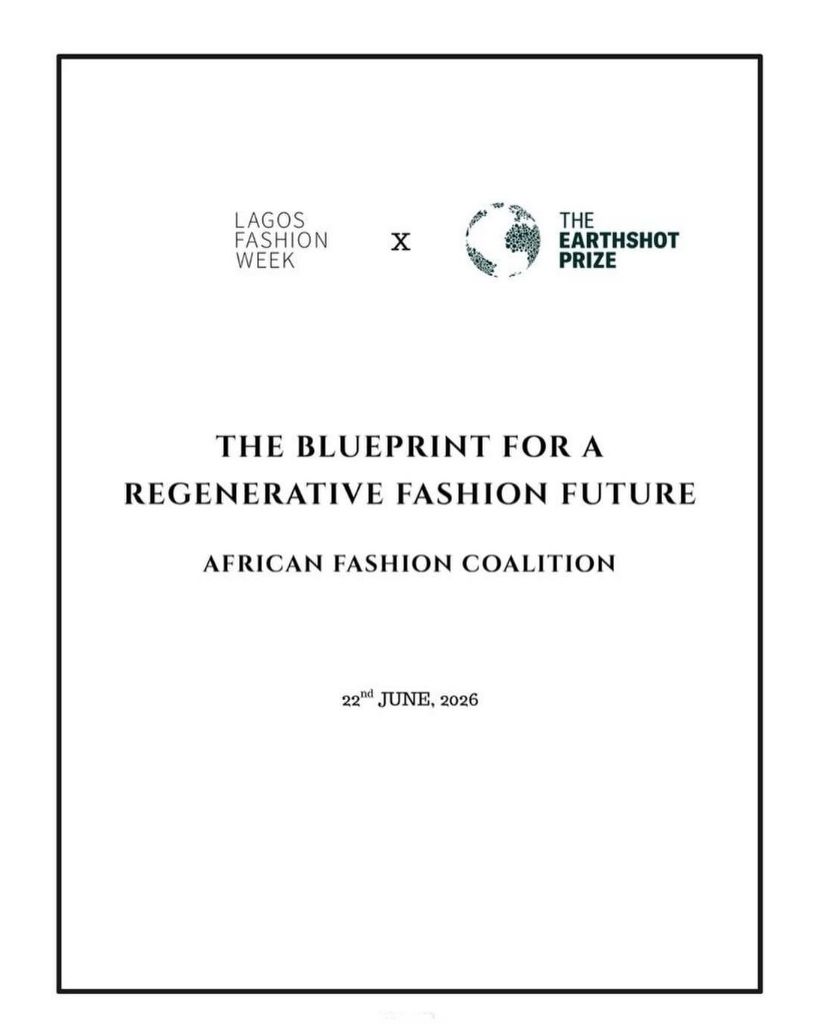
“The blueprint for a regenerative fashion future” is available on the Lagos Fashion Week website. This reference document is the result of a collaborative effort that began during the Manifesto Lab in April 2026. This working group brought together leading figures in the fields of the arts, research, and activism across the continent: Simone Smit (Africa Director of the Earthshot Prize), Adama Amanda Ndiaye (founder of Dakar Fashion Week), Mahlet Teklemariam (founder of Hub of Africa Fashion Week), Liz Ricketts (The Or Foundation), Renee Neblett (Kokrobitey Institute) and the researcher Jackie May.
The manifesto is organized around ten interconnected strategic pillars:
1. Cultural Heritage and Living Knowledge (Cultural Heritage & Living Knowledge)
Integrate traditional and intergenerational knowledge into the heart of contemporary creation.
2. Circularity as a Foundation (Circularity as a Foundation, Not a Trend)
Institutionalize repair, reuse, and resource-efficient management to move beyond the fleeting trend of greenwashing.
3. Community-Led Creation and Prosperity (Community-Led Creation & Prosperity)
Ensure a fair distribution of value and test innovative community ownership models.
4. Cultural Sustainability and Intellectual Property Protection (Cultural Sustainability & IP Protection)
Legally protect patterns, dyes, and techniques against the exploitative appropriation by Western brands.
5. Waste Justice and Global Accountability (Waste Justice & Global Accountability)
Hold Northern countries legally and financially accountable for the massive flows of used textile waste imported into Africa.
6. Local Production and Economic Sovereignty (Local Production & Economic Sovereignty)
To industrialize the processing of African natural fibers (cotton, raffia, silk) locally.
7. Regenerative Innovation and Climate Resilience (Climate-Responsive & Regenerative Innovation)
Support sustainable technologies and respect for local agricultural ecosystems.
8. Market Access and Platform Power (Market Access & Platform Power)
Create networks for accessing international markets managed by sovereign African platforms.
9. Infrastructure and Systems (Infrastructure & Systems)
Invest in transportation, energy, and intra-African logistics to boost regional trade.
10. Conscious Consumption and Behavioral Change (Conscious Consumption & Behavioral Change)
Promote a culture of mindful consumption, focused on the sentimental value and longevity of clothing.
From the Manifesto to the Runway
Far from being merely a theoretical document, this strict sustainability policy is already a reality on the runways of Lagos Fashion Week, where every invited designer must demonstrate their commitment. During recent editions, four artistic approaches have particularly illustrated this transition:
- Eki Kere: who creates high-end, architectural silhouettes from 100% upcycled denim.
- Cute-Saint: which designs a contemporary, gender-neutral wardrobe using upcycled secondhand textiles sourced from local markets.
- Adira Oodua Textile Hub: which revives traditional Yoruba dyeing techniques using natural pigments and local plants.
- Fruché: which showcases recycled silk and hand-woven cotton to tell authentic stories of African culture.
By linking the art of tailoring to respect for the earth and economic sovereignty, the manifesto The Blueprint for a Regenerative Fashion Future proves that African fashion no longer seeks validation from the world: it is shaping the contours of a more just and breathable global future.
Read also
- GALXBOY: The South African streetwear success story that is redefining African luxury
- The “Sizing Tax”: The Hidden Cost of Fit Weighing on West African Fashion