Strategic Lessons from Philippe Labonne, President of Africa Global Logistics
At an exclusive conference organized by the HEC Alumni clubs, Philippe Labonne, president of Africa Global Logistics (AGL), shared three decades of insights on the continent’s infrastructure.
The Challenge of Local Transformation
One of the most striking observations made by Philippe Labonne applies directly to the textile industry: 90% of Africa’s raw materials are still exported in their raw state, without any local processing.
For the apparel industry, this paradox is striking. Africa produces some of the finest cotton, leather, raffia, and plant-based fibers in the world, yet it frequently reimports them in the form of industrially printed fabrics or finished garments manufactured in Asia or Europe.
As the AGL executive points out, true good governance and economic sustainability lie in driving transformation from within:
- Industrial Job Creation: With more than half of the continent’s population under the age of 20, the value added from garment manufacturing and weaving must remain on African soil.
- Textile Sovereignty: Just like the industrial megaprojects discussed at the conference (such as the Dangote refinery or the construction of modern spinning mills), African fashion will only be able to scale up by developing horizontally integrated factories and processing facilities.
Building Resilient Supply Chains
The era of hyper-optimized globalization and extreme“just-in-time” practices is over. Faced with global geopolitical volatility, air freight costs, and maritime bottlenecks, fashion brands must urgently rethink their supply chains.
For players in the African ready-to-wear and luxury goods sectors, the lesson from large-scale logistics is crystal clear: they must adopt “nearshoring” and local inventory management.
- Locating inventory near key markets: Instead of shipping each B2C order individually from a remote warehouse via expensive express carriers, fast-growing brands should position buffer stock in strategic regional hubs (Abidjan, Dakar, Lagos, Casablanca, Nairobi) as well as in their main export markets (Paris, London, New York).
- Reducing delivery times: Uncertainty about order size and shipping delays are the primary barriers to e-commerce purchases. Securing your local supply chain allows you to offer a customer experience that meets international standards.
Unlock Regional Feeds
While intra-Asian trade accounts for 50 million containers per year and intra-European trade for 5 million, intra-African trade amounts to only about 650,000. Yet, with 1.4 billion potential consumers and the advent of the AfCFTA (African Continental Free Trade Area), the regional market represents the primary growth driver for creators.
Port, road, and rail infrastructure is expanding at an unprecedented rate:
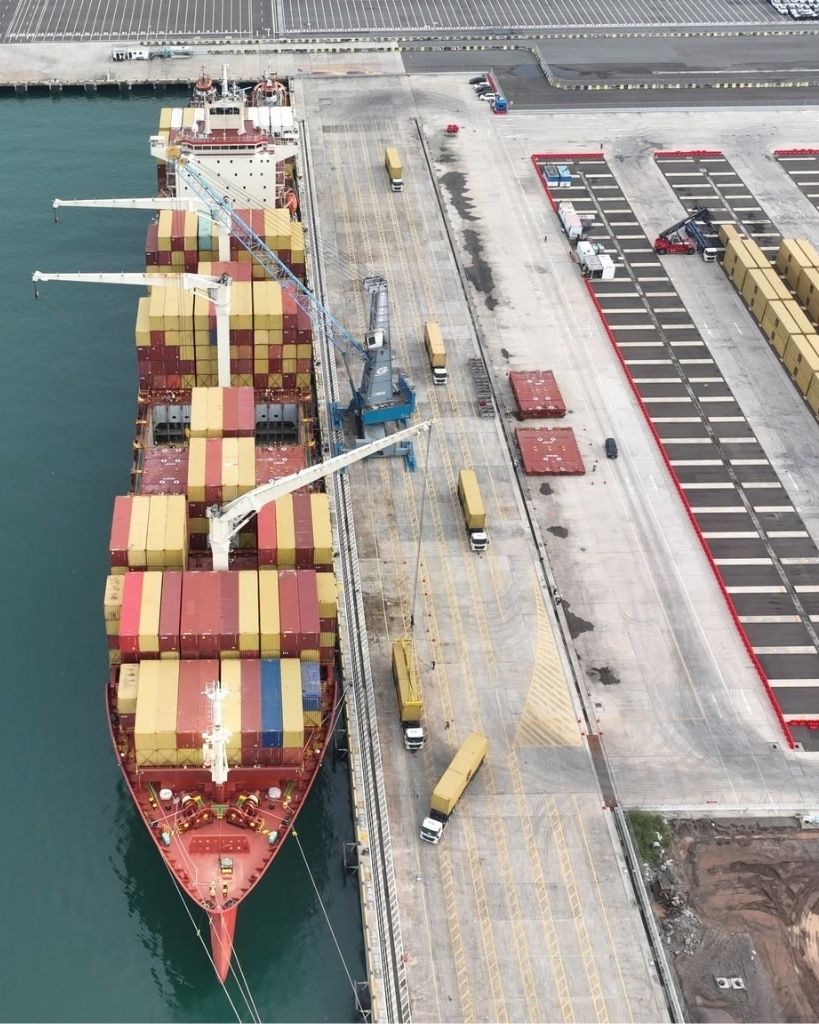
- Major highway corridors (such as the Lagos-Abidjan route) and the development of world-class port terminals (such as the Port of Tema in Ghana) are gradually helping to streamline trade.
- For fashion brands, simply establishing a presence in a country is no longer enough. It is becoming crucial to plan for cross-border distribution and to rely on regional logistics networks capable of managing customs compliance and tracking packages in real time.
The Decentralization of Powers
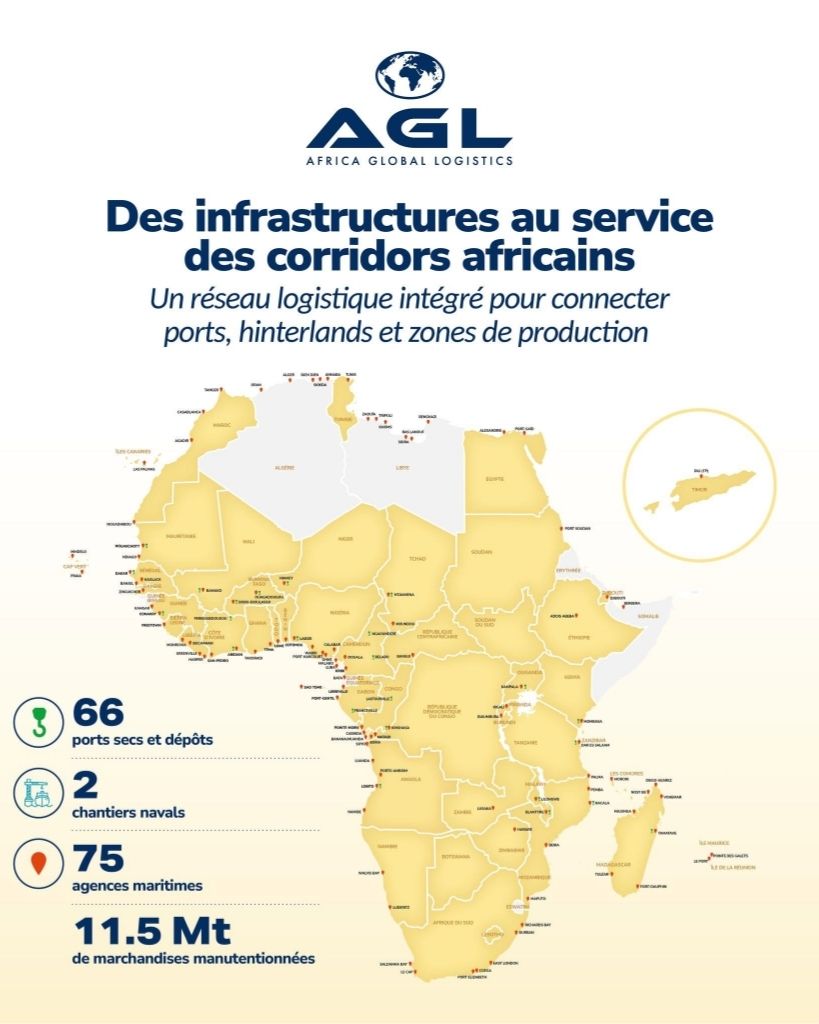
To manage a network spanning 47 countries with 24,000 employees (98% of whom are African or of African descent), AGL eschews centralized management and has established regional centers of excellence: Casablanca for heavy engineering, Abidjan for technology and digital, and Rwanda for compliance and human resources.
This organizational model provides a roadmap for African fashion houses that are in the process ofscaling up:
- Geographic Specialization: A brand may very well choose to manage its creative direction and branding from Dakar or Abidjan, outsource its labor-intensive manufacturing to a highly skilled workshop in West or North Africa, and base its e-commerce operations or customer support in a high-performance digital hub.
- Leveraging Local Talent: A company’s success lies in its ability to recruit, train, and retain local talent across the continent.
Entrepreneurship
Beyond the numbers and shipping containers, the most inspiring message from the conference lies in the managerial approach. In the face of uncertainty in emerging markets, the primary driving force is not just financing, but enthusiasm and perseverance.
As the famous saying often attributed to Nelson Mandela goes: “It always seems impossible until it’s done.”
For young designers and creative entrepreneurs facing a lack of traditional financing, the cost of importing supplies, or the complexity of customs procedures, the key to success lies in:
- A Culture of Partnership (PPPs and Coalitions): Partnering to share logistics costs, physical retail spaces (pop-ups, concept stores), and rent renegotiations.
- Discipline and frugality: Calculate theunit economics for each garment before investing in major marketing campaigns.
- Dialogue and Transparency: Setting clear terms with suppliers, artisans, and distributors to build long-term relationships based on trust.
Infrastructure in the Service of Soft Power
By connecting ports, railways, and data centers, logistics builds the invisible foundation upon which a continent’s cultural influence rests.
African fashion will only be able to establish “Made in Africa” as the new global standard for luxury if it is backed by flawless logistics management. By combining the creative power of cultural narratives with the operational rigor of the supply chain, the African fashion ecosystem has everything it needs to build the major industrial conglomerates of tomorrow.
Read also