Timelines, Arbitration, and Industrial Decolonization
For decades, the relationship between high-end African fashion and Western fashion capitals has revolved around heroic individual initiatives. We recall the journey of the Senegalese pioneer Collé Sow Ardo. Trained at the Institut de Coupe et de Haute Couture in Paris in the 1970s, and a renowned international model until 1982, she founded her own fashion house in 1983 and established the woven pagne as a prestigious fabric, earning the title “African Chanel” from the global press. Her work, celebrated in Dakar in December 2023 to mark the 40th anniversary of her brand, has enriched Senegal’s cultural diplomacy, from the uniforms worn by the Lions of Teranga during their 2026 Africa Cup of Nations victory to the ceremonial gown worn by First Lady Absa Faye at the UN General Assembly in September 2025.
Today, this legacy of prestige is coupled with a fierce determination to achieve economic sovereignty and global integration. African designers are challenging the structures that exploit value and are partnering with key Fashion Weeks in Porto, Copenhagen, and Berlin to set a new ethical, circular, and commercial standard.
Fashion Weeks in Porto, Berlin, and Copenhagen
The positioning of African brands within the European fashion calendar is now based on long-term strategic partnerships designed to ensure sustained access to the global market and restructure local value chains.
Portugal Fashion and the CANEX Runway
In June 2021, the National Association of Young Entrepreneurs of Portugal (ANJE) entered into a three-year partnership with the African Export-Import Bank’s (Afreximbank) Creative Africa Nexus (CANEX) program. This initiative, titled CANEX Presents Africa @ Portugal Fashion, serves as a true industry incubator, combining in-person fashion shows in Porto with technical mentoring programs led by industry experts and commercial internationalization strategies. Since the program’s launch in Porto in October 2021, more than 70 designers from over 25 African countries and the diaspora have benefited from this export showcase.
Selected candidates undergo a rigorous evaluation of their commercial maturity, their commitment to sustainability, and their ability to supply international markets. The program is divided into two categories of runway presentations: first, the Main Catwalk Designers, reserved for brands that have been established for more than 5 years and have produced at least 5 collections; and second, the Bloom Runway, a support platform for emerging talents under 35 who have already presented at least two collections and have been in the market for less than four years. The Brand-Up exhibition space, meanwhile, showcases designers of leather goods, accessories, and jewelry.
The Ghanaian brand Boyedoe perfectly illustrates the impact of this initiative. Presented during the October session under the auspices of CANEX, the brand stood out for its approach to deconstructing and reconstructing recycled secondhand denim, combining contemporary, gender-neutral design with traditional Akan folklore, notably through the symbol of the mythical Sankofa bird. This collaboration demonstrates that Afreximbank’s partnerships aim to transform the international perception of African brands while also facilitating their access to key trade shows such as Tranoï during Paris Fashion Week.
Copenhagen Fashion Week and the Zalando Visionary Award

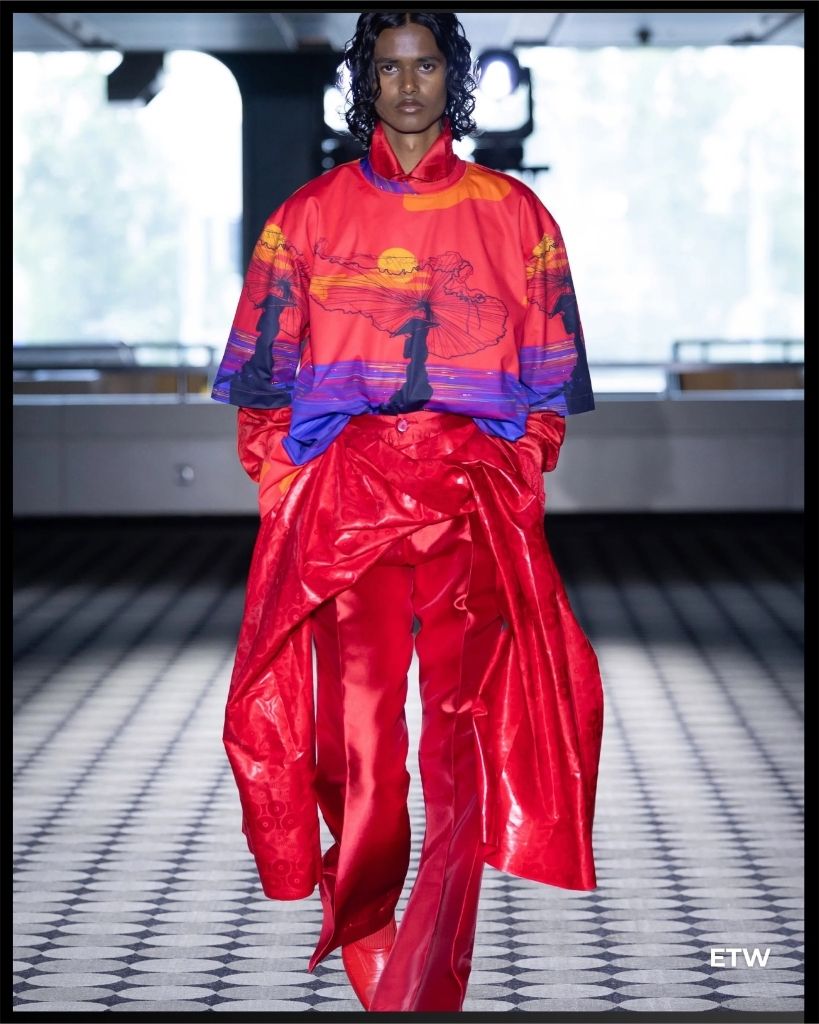
Recognized worldwide as the leading hub for sustainable fashion, Copenhagen Fashion Week enforces strict environmental and ethical standards for all its participants. It is within this highly selective ecosystem that the contemporary wearable art brand IAMISIGO, based in Lagos, Nairobi, and Accra, was named the winner of the 2025 Zalando Visionary Award. This award granted the brand a production grant as well as an official slot on the Fashion Week schedule to present its Spring/Summer 2026 collection, titled “Dual Mandate.”
The IAMISIGO initiative, founded by Bubu Ogisi, centers on the preservation of Africa’s intangible cultural heritage and the decolonization of minds. For the Dual Mandate collection, the designer subverted the semantics of the colonial text of the same name written by Lord Lugard, transforming a tool of imperialist occupation into a manifesto of self-preservation, spirituality, and energetic alignment. Working closely with remote artisan communities across the continent, the designer uses highly symbolic and sustainable materials:
- The use of unbleached cotton from Uganda and Kenya.
- The incorporation of raffia and jute fibers from Nigeria, as well as sisal from Tanzania.
- Techniques ranging from fiber knitting and forging copper and brass mesh with therapeutic properties to glassblowing for sculptural accessories that hold water.
This foray into Copenhagen highlights a profound conceptual reality: traditional African fashion is ontologically sustainable, slow, and rooted in a natural circularity that predates the capitalist theorization of environmental responsibility.
Berlin Fashion Week and the Berlin Contemporary platform
The German capital is shaping its commitment to global creativity through the Berlin Contemporary competition, one of Europe’s most dynamic initiatives to support emerging talent, led by theGerman FashionCouncil. This program awards direct grants of 25,000 euros to 19 designers selected to present their official collections.
During recent sessions, the creative excellence of the African continent was particularly highlighted by the selection of leading brands such as Orange Culture (Nigeria), Fruché (Nigeria), and Buzigahill (Uganda). These brands, which push the boundaries of cultural narrative, genre, and textile deconstruction, have joined a prestigious international lineup alongside renowned labels such as BARRAGÁN, GmbH, Andrej Gronau, and John Lawrence Sullivan.
The Political Impact of Eniafe Momodu’s Appointment in Berlin
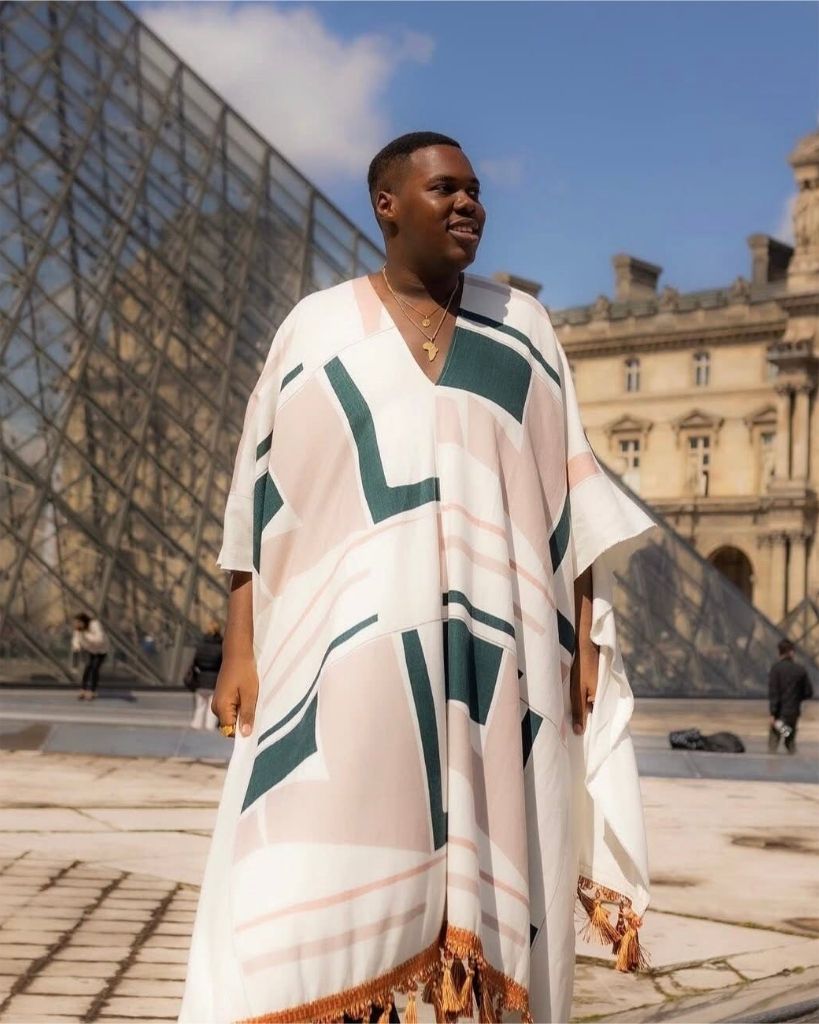
The appointment of Nigerian creative strategist, photographer, writer, and cultural commentator Eniafe Momodu to the jury of the Berlin Contemporary competition marks a decisive step in the political and symbolic restructuring of European fashion’s decision-making bodies.
A Break from the Model of Selective Visibility and Tokenism
Historically, the presence of the Global South in Western fashion capitals has often been limited to superficial inclusion. This phenomenon of marginalization, analyzed at the Fashion Africa Now conference held under the title “UNGERMAN – UNDEUTSCH Five Years After Black Lives Matter,” demonstrates that structures of systemic exclusion remain deeply entrenched in Europe. Renowned panelists such as Beatrace Angut Oola, Kemi Fatoba, Meriem Lebdiri, Boitumelo Pooe, and Jacqueline Shaw explained how whiteness remains the unspoken standard of national identity in Germany’s fashion industry, while the visibility granted to Black, Muslim, or Romani designers is often marked by selectivity, colorism, and superficial tokenism.
The inclusion of Eniafe Momodu on an international jury with direct decision-making and financial authority—namely , the power to evaluate submissions and award the 25,000-euro grants from Berlin Contemporary—provides a concrete response to these systemic imbalances. It shifts the focus from mere visual representation to the exercise of sovereign power in the selection process.
Shifting the Focus Away from Aesthetic and Commercial Evaluation Criteria
As a respected figure in cultural research and brand strategy in Africa, Eniafe Momodu brings a critical perspective that is essential for analyzing the viability and artistic value of the submissions. Her position allows for a shift in the focus of the evaluation:
- Deconstructing Folkloric Reductionism: Unlike Eurocentric interpretations, which often reduce African creations to exotic representations or traditional crafts, Eniafe Momodu applies a framework capable of capturing the conceptual sophistication and profound narratives behind these brands.
- Redefining the Criteria for Economic Viability: Its in-depth understanding of the operational realities of emerging markets enables it to reassess independent business models that demonstrate technological agility and highly effective community development.
- Equity in Scholarship Awards: The inclusion of a juror from the African continent ensures greater vigilance against colorism or tokenism, promoting a genuine redistribution of resources and a diversification of the voices recognized with awards.
Outlook for Creators
The transition of the African fashion ecosystem toward a model of economic sovereignty and global recognition in Europe calls for concerted action on the part of Fashion Week organizers, investors, and brands:
- Ensuring the Sustainability of Co-Decision Partnerships: European Fashion Weeks should follow the example of Berlin Fashion Week by permanently incorporating experts from the Global South—who hold exclusive voting rights—into their scholarship selection committees, in order to combat tokenism and ensure an equitable distribution of financial resources.
- Direct financing for local processing hubs: Multilateral banking institutions and impact investment funds must increase their financial support for projects aimed at industrialization and the value-added processing of raw materials on African soil, in order to maximize the retention of value added on the continent.
- Legal Protection of Intellectual Property: African governments, in consultation with the World Intellectual Property Organization and groups such as the African Fashion Coalition, must establish strict legal frameworks to protect traditional patterns, weaves, and techniques against value capture and appropriation by third parties without providing any benefits.
African creative expression is no longer seen as merely an aesthetic alternative for Western runways, but as the vanguard of a regenerative, ethical, and sovereign fashion model, destined to profoundly redefine global industrial practices.
Read also