Why must Africa build institutions that protect its cultural heritage?
For years, African fashion designers have sought to break into the markets of Paris, New York, Milan, and Dubai. But a fundamental question remains: why is it always up to others to open those doors, and why should we continue to ask for access to a system we didn’t create?
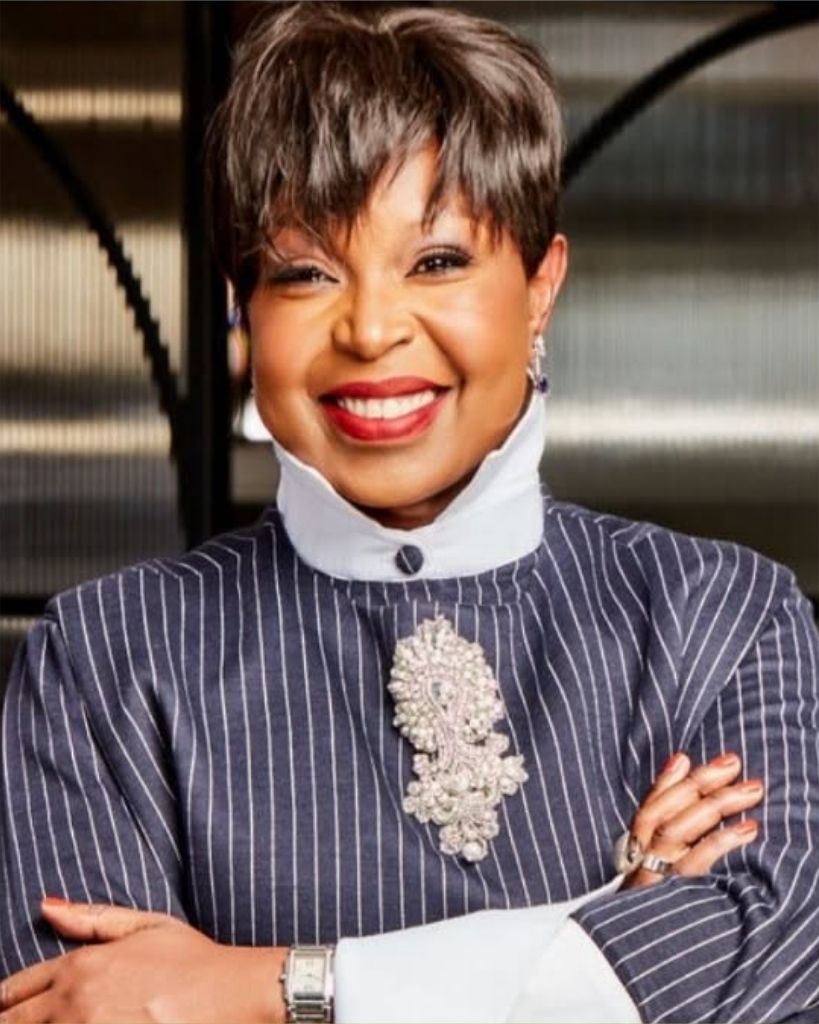
For cultural strategist Lulu Shabell, the problem has never been access. It’s a matter ofarchitecture. In a seminal essay, she lays the groundworkfor ÀLKÉ (Art, Legacy, Knowledge, Enterprise), a pan-African institution designed to endure, built on a crystal-clear truth: Africa has never been in the fashion industry; it has always been in the culture industry.
The Importance of Intellectual Property
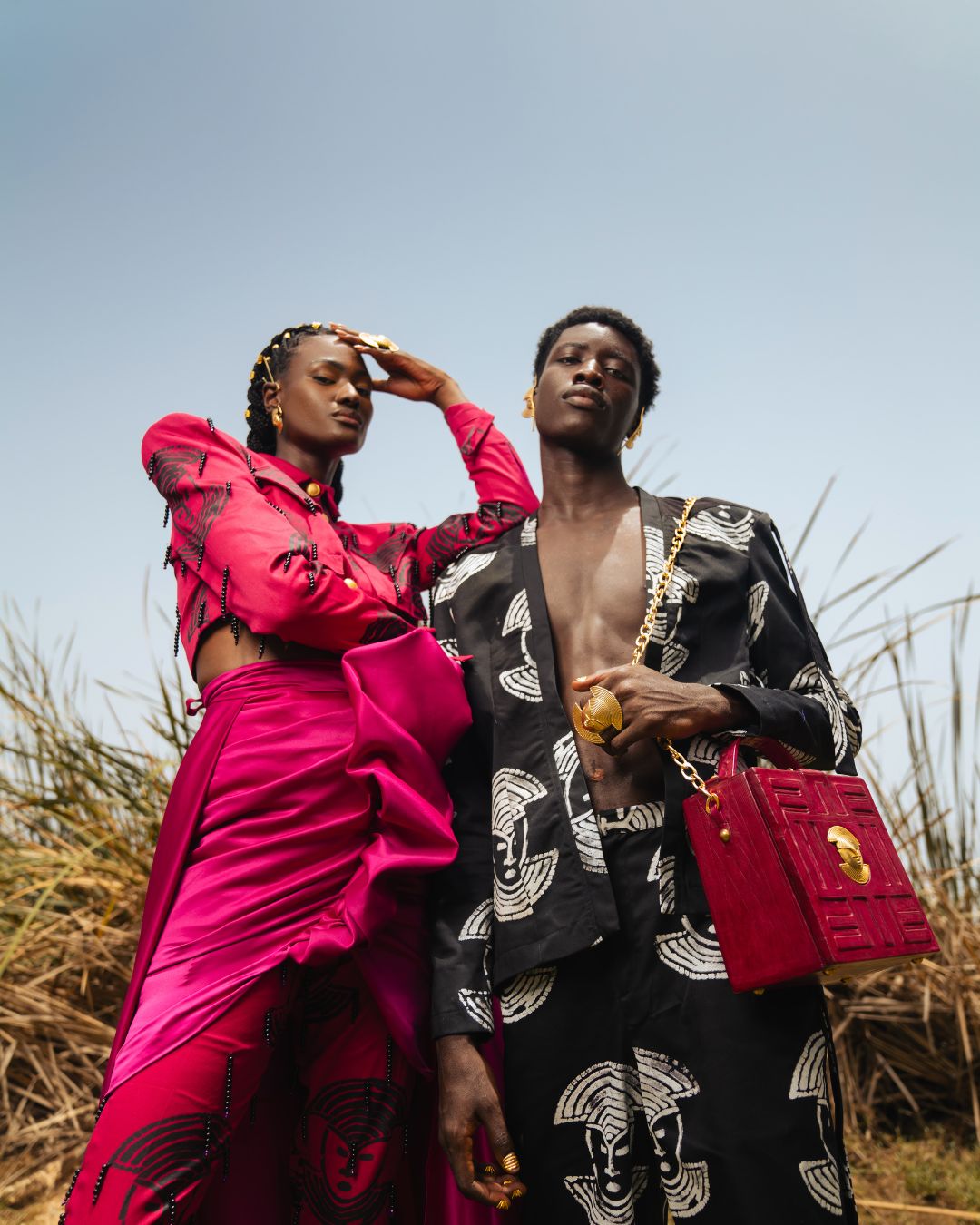
Lulu Shabell reminds us that what the global market today calls “fashion” is merely a recent manifestation of practices that Africa has upheld for millennia.
- Blombos Cave (South Africa): Archaeological discoveries there have unearthed 41 perforated shells dating back approximately 75,000 years, bearing traces of red ochre. This marks the birth of human communication through adornment, long before the emergence of figurative art in Europe.
- The Kuba Kingdom (DRC): Its master weavers used geometry not merely as decoration, but as a complex linguistic system encoding genealogy, cosmology, and power. There, textiles served as currency, political contracts, and a form of cultural expression, centuries before the signing of the Berne Convention on intellectual property in 1886.
Yet the same historical bias that once led European colonists to seek non-African origins for the Ife bronzes (deeming them too sophisticated to be local) continues to operate today in more subtle ways.
“When a Western luxury brand turns Kuba geometry into profit without paying royalties, without acknowledging or granting ownership to Congolese communities, that’s not inspiration. It’s exploitation dressed up as haute couture. ”
For ÀLKÉ, scientifically documenting and legally protecting this historical precedence is not a nostalgic endeavor. It is the very foundation of bargaining power, pricing, and licensing rights.
Stop Being the Students of Luxury
The heart of the current crisis lies not only in the markets, but also in the classrooms. Most fashion schools on the African continent continue to teach the history of clothing exclusively through a Western lens.
Students are encouraged to view Paris or London as their only points of reference, overlooking complex local textile traditions such as Adinkra symbolism, Ndebele beadwork, or Maasai draping.
This education leads young creatives to view themselves as newcomers to a history that their own ancestors actually shaped. Unaware that they are the source of that history, they operate as mere subcontractors in workshops rather than as custodians of a unique body of knowledge.
ALKÉ thus places decolonial education at the heart of its mission to raise a generation that understands that Africa is not a student of luxury, but one of its oldest teachers.
Culture as Economic Infrastructure
The term “culture” is all too often overused, treated as a mere embellishment rather than a driver of economic prosperity. The figures in the 2024 UNCTAD report reveal a striking paradox:
- In 2022, the African fashion industry generated $4.2 billion in exports.
- The African creative economy as a whole generated $2.4 billion in goods and $4 billion in services.
- However, Africa’s share of the global creative economy was only 1.5% in 2022.
The potential for growth is enormous. According to BCG projections, with targeted structural investments, Africa’s creative economy could generate between $150 billion and $160 billion annually by 2030.
This gap between creative potential and captured value can be explained solely by the lack of robust institutions to protect this wealth. ÀLKÉ aims to fill this gap through three interconnected mechanisms:
- A center of excellence in traditional crafts: To preserve, innovate, and promote local craftsmanship.
- A venture studio: To structure and scale up viable, exportable creative businesses.
- A sovereign endowment fund: To ensure that financial returns accumulate for the benefit of future generations, rather than vanishing at the end of a grant cycle or a short-lived project.
What we owe to future generations
Building permanent institutions is a generational responsibility. In the absence of archives and legal frameworks to protect collective intellectual property, Africa has been stripped of its intangible heritage.
ÀLKÉ is committed to turning the tide on a continental scale. This institutional journey will kick off with the first ÀLKÉ Ball in Cape Town (South Africa), just a few kilometers from the Blombos Cave, where humanity first began to adorn itself with art.
This event will officially launch the ÀLKÉ Endowment Fund, before traveling to the continent’s major cultural capitals: Lagos, Nairobi, Dakar, Addis Ababa, Accra, and Cairo.
It is no longer about selling fashion. It is about establishing the certainty that African culture is a sovereign foundation, and that nothing created on this continent should ever leave it without intellectual property rights or local benefits.
Read also