Why Knightsbridge Is Becoming the New Hub for African Luxury
The opening of a pop-up store within Harrods’ flagship store in Knightsbridge marks a major symbolic and commercial turning point. Long confined to temporary initiatives or ancillary spaces, high-end fashion from the African continent is now taking center stage at one of the world’s most exclusive and prestigious shopping destinations.
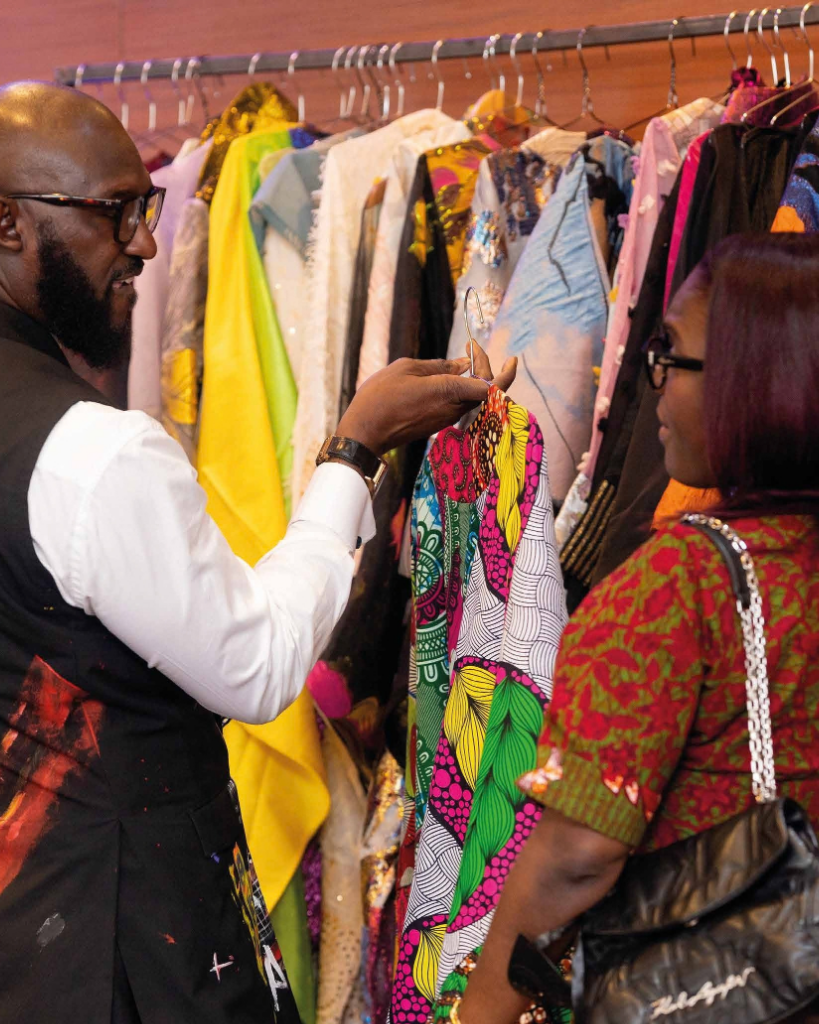
This major opportunity arose from the synergy between cultural strategist Lulu Shabell, CEO of LULUBELL Group and founder of the ÀLKÉ label, and the social enterprise Brand63Africa. Together, they have curated a discerning selection that eschews folkloric clichés to showcase technical excellence, clean lines, and sustainable innovation.
Occupying the fifth floor of this London institution, these brands are no longer seeking mere aesthetic validation. They are positioning themselves to attract the most discerning international clientele and assert that the standards of contemporary luxury are also being set in Accra, Lagos, Dakar, Nairobi, and Port of Spain.
Five exceptional works that blend technical virtuosity with a celebration of cultural heritage

Sukeina
To assemble this first group of ambassadors, the project curators brought together five designer houses known for their distinctive styles, remarkable for their mastery of textures and the depth of their narratives:
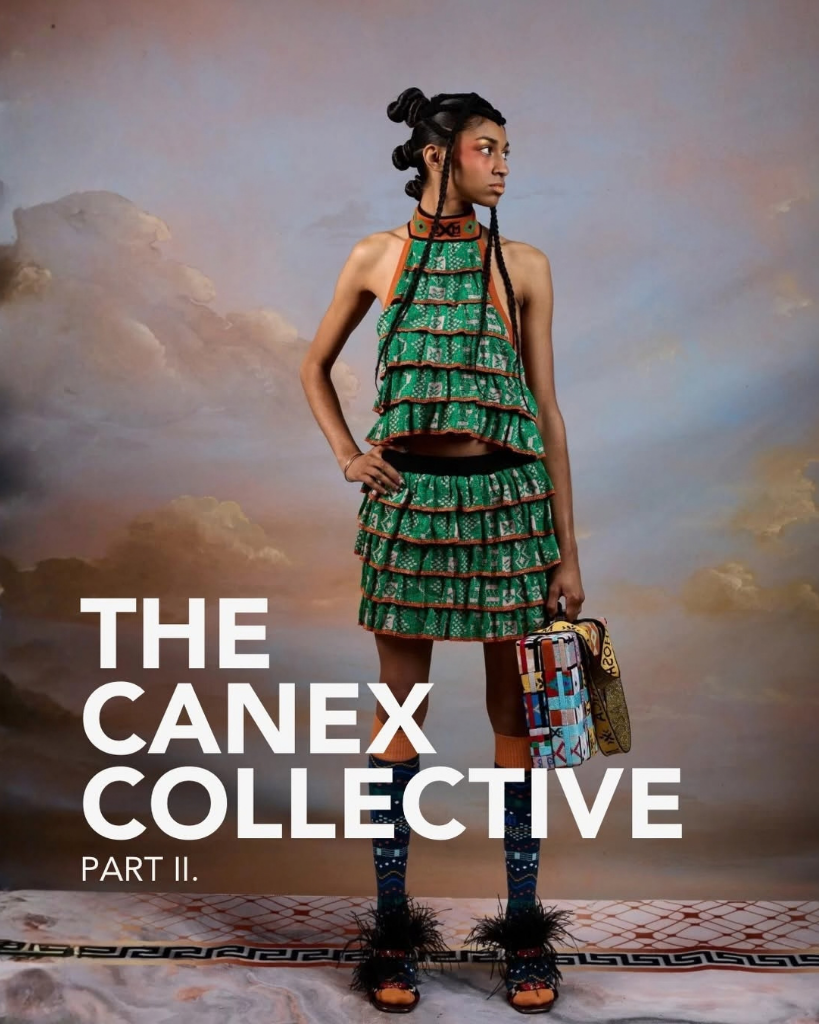
- Christie Brown (Ghana): Founded in 2008 by designer Aisha Ayensu, this leading West African fashion house draws on a workshop of more than 90 skilled artisans. The brand reinterprets the region’s textile treasures—from traditional kente to wax prints—elevating them with laser-cut, architectural corsets, surgical-precision tailoring, and dresses designed as modern ensembles.
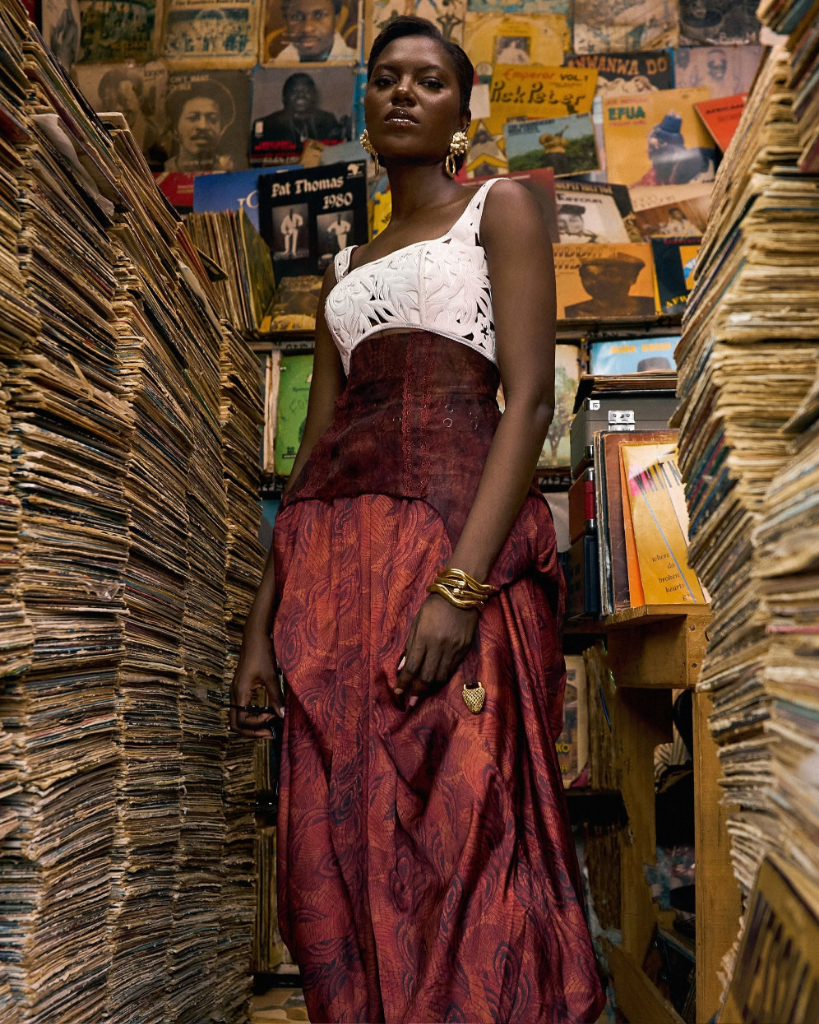
- Abiola Olusola (Nigeria): Based in Lagos, the brand embodies a contemporary take on minimalism enhanced with graphic touches. Working closely with master local weavers, Abiola Olusola develops her own striped Yoruba fabrics, embellished with raised beadwork and crafted into flowing, asymmetrical silhouettes.
- Sukeina (Senegal / International): A semi-haute couture house launched in 2012 by Senegalese-born designer Omar Salam, who honed his craft in the Parisian ateliers of Sonia Rykiel and Christian Lacroix. Named in honor of his mother, the brand sculpts the female form through intricate origami-style pleats, precisely calculated plays on transparency, and an immediately recognizable emotional impact.
- Studio Namnyak (Kenya): Founded in Nairobi in 2021 by Namnyak Odupoy, this brand explores the frontiers of circular design. By combining 3D digital modeling technologies with the hand-weaving of indigenous plant fibers, the studio creates enveloping forms and flowing silhouettes that reinvent East African craftsmanship.
- The Cloth (Trinidad and Tobago / Caribbean): A true institution of Caribbean design, founded in 1986 by Robert Young and Sophie Bufton, the brand is celebrating four decades of avant-garde design. Using the prized West Indian Sea Island cotton, grown exclusively on the islands, it presents a narrative-driven collection featuring socially conscious patchwork and loose-fitting silhouettes, embodying the political and historical bridge between Africa and its diaspora.
How to Turn Media Exposure into Sustainable Economic Profitability

Abiola Olusola
Lulu Shabell’s initiative stems from a clear-eyed assessment of the ecosystem’s current shortcomings. For several seasons now, African fashion has been the subject of sustained international media attention on the runways of Fashion Weeks. However, this seasonal visibility all too rarely translates into a solid accumulation of capital or firm orders capable of ensuring the long-term viability of the ateliers.
The goal of this presence at Harrods is therefore to bypass the stage of mere critical acclaim. By positioning the collections directly in front of end consumers with exceptional purchasing power, the initiative allows brands to generate direct margins and analyze consumer feedback on their cuts and materials in real time.
Establishing a presence in Knightsbridge also serves as a catalyst for negotiating future wholesale distribution agreements with major European, American, and Middle Eastern department stores. Financial profitability thus becomes the primary safeguard for ensuring these designers’ autonomy and independence.
Pricing Power as a Lever of Sovereignty

The Cloth
Beyond sales figures, this London pop-up is waging a crucial battle over the perception of intangible value. Lulu Shabell emphatically points out that African textile engineering—whether it involves the complex chemistry of natural dyes or the mathematical structures of hand-woven fabrics—is just as valuable as prestigious Western brands.
For a long time, international buyers have tried to confine the continent’s fashion to an undervalued pricing structure under the pretext that it comes from emerging economies. The display of these pieces on the 5th floor of Harrods, alongside the world’s leading luxury brands, legitimizes the brand’s ability to set prices with confidence.
The craftsmanship of a Ghanaian artisan or a Nigerian weaver is recognized here as a rarity worthy of the highest standards of craftsmanship, fully justifying its international pricing.
An international expansion model set to set a precedent

Namnyak Studio
This inaugural collaboration with Harrods is not an end in itself, but rather a methodological test bed. For Brand63Africa, this London experience will serve as a blueprint for structuring future commercial residencies in other key luxury consumer capitals, notably Paris, Dubai, New York, and Tokyo.
By combining the precision of continental workshops with the world’s most demanding distribution channels, this alliance demonstrates that African fashion has moved beyond the stage of self-assertion. It has now established itself as a powerful, independent commercial force that is indispensable to the renewal of the global luxury industry.