A Shift Guided by Intuition
A pianist by training, with a master’s degree in social and cultural anthropology and a former teacher in the French public school system, nothing suggested that Sofia Essaeid was destined to run a fashion company. It was in July 2020, on a completely spontaneous impulse, that she purchased two meters of iridescent satin cord at a fabric store.
At home, she experiments with different combinations of knots without a pattern or preliminary sketch, creating her first bracelet—which has a delicious look—that she names the “Marshmallow.”
With the support of her husband and strong encouragement from the owner of a local concept store—to whom she showed her design—Sofia immediately recognized the commercial potential of her idea. With the expert advice of a designer friend who spotted the concept’s novelty on Instagram, she filed her designs with INORPI (the National Institute for Standardization and Industrial Property in Tunisia).
“Everyone who knows me knows that I’m a big dreamer, but I’m also extremely thorough. When I love something, I like to see it through to the end. At first, my husband and I were practically the only ones who believed in it, but I knew this project was going to be a big success.”
Leaving Teaching to Restructure the Company
For a year, Sofia led a double life. Her teacher’s desk, usually covered with papers to grade, gradually transformed into a mini weaving workshop filled with colorful cords, beads, and little pouches.
Realizing that an innovative idea must be protected and implemented quickly to prevent it from being copied, she made a major decision: to request a one-year leave of absence before formally submitting her final resignation from the Ministry of Education.
She invested her savings to redesign the brand’s visual identity and open a brick-and-mortar workshop in La Marsa, a coastal town located 30 minutes from Tunis.
An ethical, 100% handmade workshop in La Marsa

To meet the emerging demand and prepare for export, Sofia herself assembled a team of four craftswomen (Leïla, Edia, Ausha, and Serida). None of them had a background in fashion or textile crafts. Sofia taught them her unique hand-weaving technique, with each artisan contributing her own specialty, from mastering knots to the precision of beadwork.
Committed to an ethical and humane approach, the founder is rethinking working conditions in the artisan sector:
- An accessible location: The workshop was chosen so that the craftswomen could get there on foot or using only one mode of transportation.
- Flexible schedules: The team works a “single-shift” schedule ranging from $8\text{h}$ to $15\text{h}$, allowing women to balance their professional and personal lives without the strain of exhausting commutes.
- No machinery: Each piece (Marshmallow and Berlingo bracelets, necklaces, bag handles, belts, and phone chains) is made entirely by hand, ensuring impeccable quality and the status of a high-end artisanal piece.
Africa Fashion Tour is the leading media outlet for African fashion—from north to south and east to west—featuring a dedicated section with interviews with fashion designers based in the Maghreb.
From La Samaritaine to Le Bon Marché
While most up-and-coming brands go through many years of prospecting and trade shows before gaining access to department stores, YasssHandmade has enjoyed a meteoric rise.
In February 2022, just six months after the company was officially established, a buyer from La Samaritaine in Paris discovered the brand on Instagram through hashtag searches. Impressed by the brilliance and uniqueness of the woven cords, she proposed a video call and placed an initial firm order to feature the brand in the Loulou concept store and the Paris Magic City pop-up shop.
The exhibition at La Samaritaine has an immediate ripple effect:
- The director of Le Bon Marché ‘s design department discovers the designs and contacts Sofia directly via Instagram to order a line of bag handles.
- Prestigious concept stores in Dubai (notably the Tasha / Bungalow $34$ group at Nikki Beach), Morocco (Casablanca, Marrakesh, Tangier), and the United Arab Emirates carry the brand.
- The brand is launching an exclusive collaboration with the Parisian cashmere house Oscar & Valentine for a line of “Mother-Daughter” bracelets.
- With support from the Creative Tunisia program (UNIDO), the brand participated for the first time in the Who’s Next trade show in Paris in $2024$, securing direct orders from buyers from Switzerland, the Netherlands, the Congo, and France.
Sofia Essaeid’s Vision of “Made in Africa”
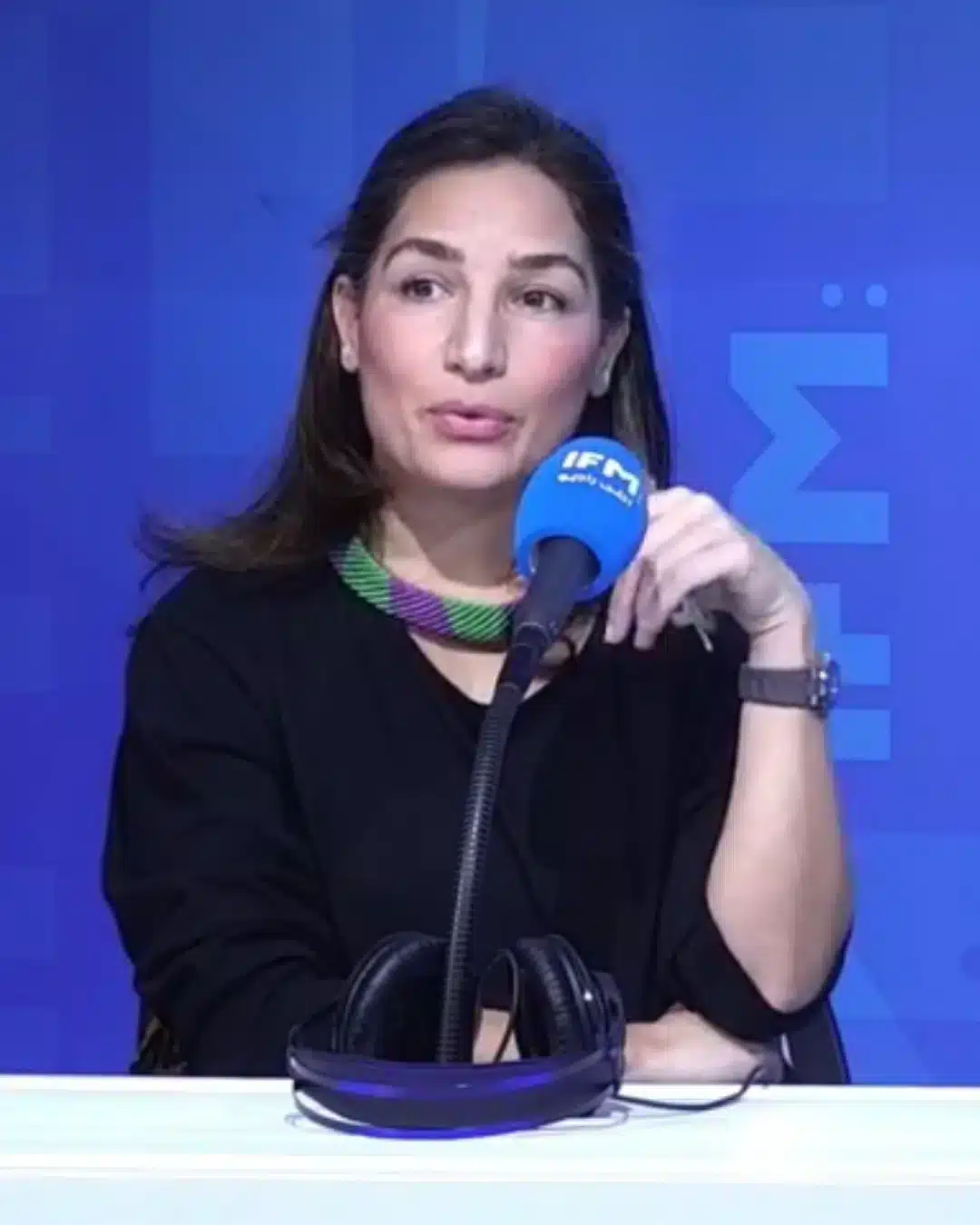
When asked by Ramata Diallo about the definition of African fashion, Sofia Essaeid championed a vision centered on technical excellence and the development of human capital:
“I wouldn’t call it ‘African fashion,’ but rather extremely talented African designers, each in their own field. Our strength lies in our mastery of entirely handmade products that cannot be produced everywhere in the world. We’re fortunate to have exceptional artisans—both men and women—whom we can train in our techniques. Combining this handcrafted quality with a contemporary and timeless aesthetic is what gives us our true strength in the global market.”
With plans to expand into the United States and the Middle East, as well as the imminent launch of new lines of woven fibers, Sofia Essaeid proves that with discipline, boldness, and a genuine artisanal foundation, creative stories born on the African continent know no boundaries.
Read also