How does archival material become an artistic language?
Founded in 1846, the Dutch textile manufacturer Vlisco has forged deep historical and commercial ties with West and Central Africa. Over the decades, it has been primarily African women—both merchants and customers—who have given the prints their true cultural heritage status by assigning them vernacular names, proverbs, and codified social functions.
To celebrate its 180th anniversary, the brand has chosen to entrust six of its most iconic designs to contemporary artists from West and Central Africa. Metal sculptures, carved coconut wood, devalued coins, woven photographic collages, and stained glass made from recycled plastic: each artist has reimagined an archival design to express their personal and collective stories through these raw materials.
Six Artists and Six Unique Encounters with Textile Memory
Each of the six works created for this permanent collection explores the connection between the printed motif, cultural heritage, and the continent’s contemporary realities:
-
Sébastien Boko (Benin) and the “Mari Capable” motif:
The multidisciplinary artist from Benin created the work *The World in Motion*, an ethereal sculpture made of painted stainless steel. Inspired by the regalia of the Egungun mask brotherhood and the traditional wrap worn by his mother and aunts in Cotonou, the piece celebrates perpetual motion and intergenerational transmission.

-
Atisso Goha (Togo) and the “Mama Benz” motif:
As a tribute to the legendary Togolese women merchants who built the economic power of the textile industry in Lomé, the sculptor created Mianô N’Dôkosu (“Our Mother Sun” in the Ewe language). Crafted from salvaged auto parts and body panels, the sculpture portrays a powerful image of female resilience.

-
Ayobami Ogungbe (Nigeria) and the “Fertility” motif:
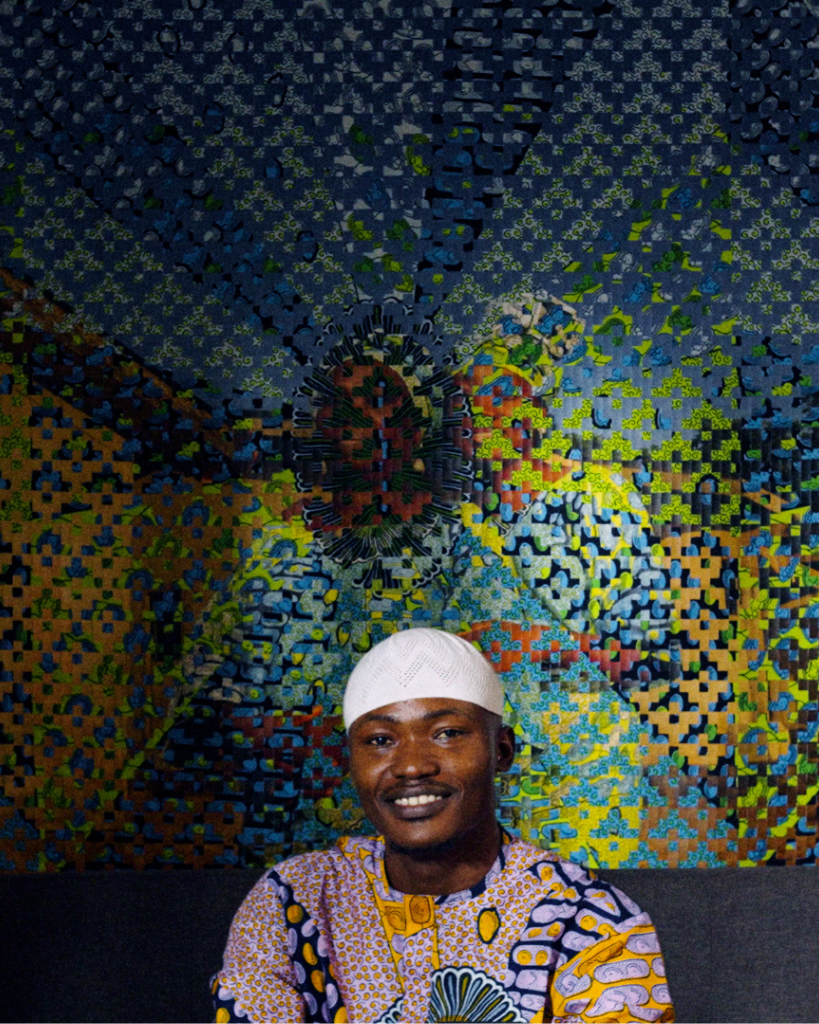
The Nigerian visual artist combines studio photography, collage, and hand-weaving techniques to create a portrait of a mother and her daughter. The interweaving of photo paper and fabric echoes her & Co. series and illustrates how family memory is passed down like a living textile.
-
Yaw Owusu (Ghana) and the “Le Robinet” motif:
The Ghanaian visual artist created a monumental sculpture using thousands of small coins (Ghanaian pesewas). By reinterpreting this motif—which symbolizes abundance and the flow of money (“Money Tap”)—he explores the history of trade, the volatility of currencies, and the true value of artisanal work.

-
Jean Servais Somian (Ivory Coast) and the “Fallen Tree” motif:
Renowned for his sustainable woodworking, the Ivorian designer crafted *Standing Tree, Broken Tree* from coconut wood and bronze spheres. The work visually interprets the motif of the felled tree to celebrate nature’s endless cycles of regeneration and fertility.

-
Prisca Tankwey (DRC) and the “Molokai Village” pattern:
The artist from Kinshasa drew inspiration from Papa Wemba’s tribute to the famous Kinshasa neighborhood to create *Kaokoko Korobo*. Created as a stained-glass light installation made from recycled colored plastics and fabric scraps, the work explores the dynamics of belonging, power, and the sacred in postcolonial societies.

Why Printed Textiles Remain a Vehicle for Cultural Reappropriation
This institutional collaboration highlights a central phenomenon in Africa’s fashion and art ecosystem: the transformation of the industrial object into intangible cultural heritage. While the production of wax fabric originated outside the continent, it is the creativity of African societies that has breathed life into it, giving it its commercial value and political significance.
By incorporating these six original designs into its permanent heritage collection—intended for future international exhibitions—Vlisco formalizes the transition of everyday clothing to the status of a museum-quality work of art.
Available in the brand’s network of stores and online, these reissued prints serve as a reminder that textiles remain one of the most vibrant mediums for documenting the social, economic, and artistic history of the African continent.
Cover photo: Ayobami Ogungbe
Read also