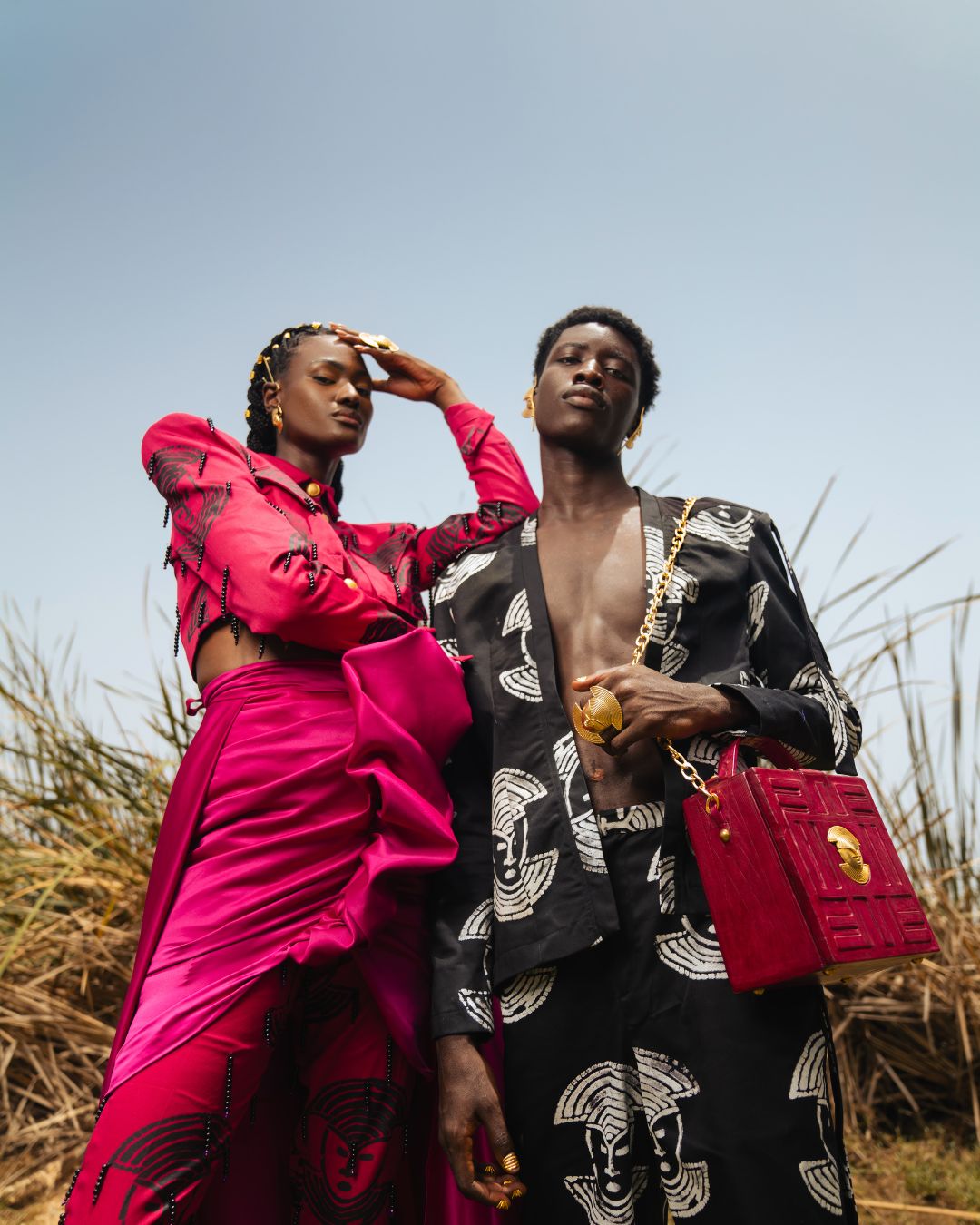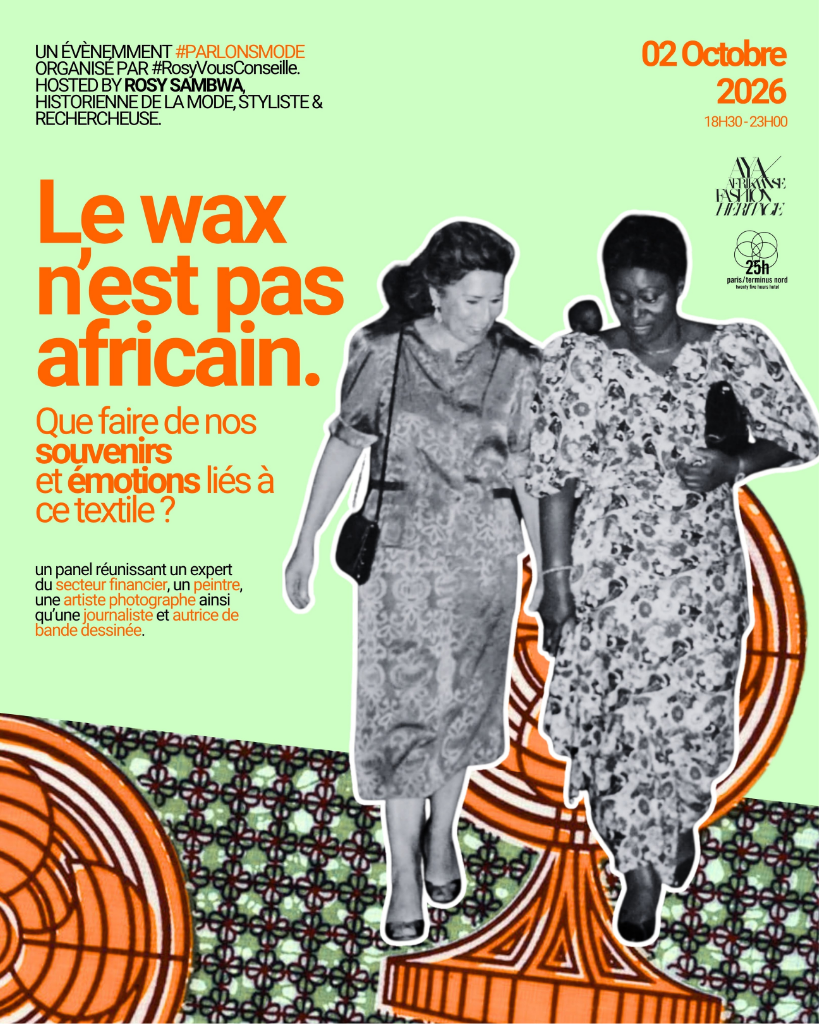
How did wax become a symbol of emancipation?
For the past fifteen years or so, the controversy over wax fabric has regularly stirred up social media and diaspora circles: wax-printed fabric, which originated in Indonesia and is manufactured in Europe, is by no means originally African. However, this technical observation overlooks a sociological and historical reality.
While the raw material may have crossed the oceans, it was the business acumen of West African mothers, grandmothers, and merchants that gave this fabric its symbolic value, prestige, and emotional significance. By giving it vernacular names, codifying its patterns to turn them into vehicles for social messages, and orchestrating massive distribution networks—such as the legendary Nana Benz in Togo—these women pioneered a true science of branding long before its time.
Given that local production struggles to exceed 7% even in the continent’s most resource-rich countries, shutting oneself off by outright rejecting textiles cuts off new generations from their own heritage. The initiative launched by Rosy Sambwa through the #ParlonsMode educational series aims to bridge the divide between fetishization and rejection in order to ask a fundamental question: what do we do today with the memories, emotions, and craftsmanship passed down through this fabric?
Three Exceptional Voices Reinventing the Textile Narrative
Following an initial, ground-breaking event in Brussels that brought together a psychiatrist, a third-generation retailer, and an activist, the Paris leg of the initiative is taking concrete action by giving a platform to three women with unique perspectives:
- Krissima Poba, Breaking New Ground Through Creative Expression: A visual artist, photographer, and science communicator, she takes a radical approach by designing her own textile patterns and creating powerful art installations. By reinventing fabric from the inside out, she demonstrates that textile sovereignty lies in the reappropriation of design and meaning.
- Justine Sow: Memory and Paradoxes on the Page: A journalist at RTL and comic book author, she is the creator of *Wax Paradoxes*. Through text and illustration, her work explores the contradictions, the search for identity, and the emotional weight of a fabric that is ubiquitous in diaspora households but whose history remains little known.
- Bijou Tshiunza, Economic Power in Service of the Community: A banking executive for the past fifteen years, she founded Microdev, a microcredit institution dedicated to supporting women entrepreneurs in the Democratic Republic of the Congo. Her presentation grounds the discussion in the financial realities of informal markets and the structuring of women’s capital.
Rosy Sambwa’s Expertise at the Intersection of Research and Fashion
As the initiator of this series, Rosy Sambwa is a leading figure in decolonial and contemporary textile research. A fashion historian, designer, and expert consultant recognized by the International Organization of La Francophonie (OIF), she is actively involved in numerous high-level academic and cultural initiatives.
From UNESCO to the Université Libre de Bruxelles, including the Museum of Black Civilizations in Dakar and the AfricaMuseum, her work demonstrates that clothing is a political archival document. Her work aims to equip young people in the diaspora and professionals in the cultural and creative industries (CCI) with rigorous analytical tools to interpret history without complacency or traumatic rejection.
An immersive evening combining reflection, a pop-up store, and socializing
Designed as a space for multidisciplinary exchange, the event on Friday, October 2, 2026, is structured around a comprehensive format that combines theoretical reflection, brand discoveries, and a friendly atmosphere:
- 5:30 p.m. – 6:45 p.m.: Preview opening of the pop-up shop to discover and purchase artwork, books, and independent creations.
- 6:30 p.m. – 7:00 p.m.: Registration and a welcome drink.
- 7:00 p.m. – 9:00 p.m.: Roundtable discussion moderated by Rosy Sambwa, followed by an interactive Q&A session with the audience.
- 9:00 p.m. – 11:00 p.m.: The pop-up shop reopens, featuring food, drinks, book signings, and continued live discussions with the speakers.
When it comes to shopping and lifestyle, visitors can discover Banxy’s textile designs, Krissima Poba’s art posters, Odewa’s handcrafted, hand-painted bookmarks, as well as refreshments from the natural beverage brand Kexura (ginger-pineapple flavor).
Turning Intangible Heritage into a Lever for the Future
The event on October 2 serves as a reminder that the value of a fabric lies not only in where it was spun, but in the stories it carries and the lives it sustains. By linking the entrepreneurial legacy of Nana Benz to current initiatives in microcredit and contemporary art, this event demonstrates that African fashion gains its autonomy when it embraces the complexity of its history to build its own economic models.
Practical Information:
- Date: Friday, October 2, 2026, from 5:30 p.m. to 11:00 p.m.
- Location: 25hours Hotel Paris Terminus Nord, 12 Boulevard de Denain, 75010 Paris.
- Directions: Metro & RER to Gare du Nord.
- Price: €55 (includes admission to the conference, a welcome drink, and exclusive access to the pop-up shop).
- Reservations: Official Online Ticket Office
Read also